
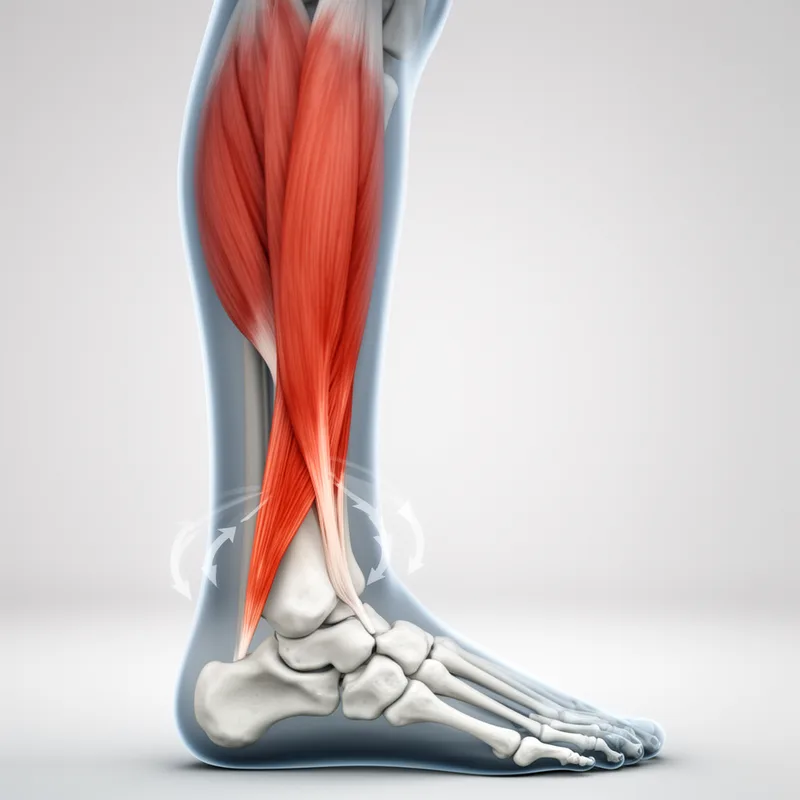
tibialis posticus
- noun
- /ˌtɪbiˈælɪs ˈpɒstɪkəs/
- Archaic
- The tibialis posticus helps stabilize the ankle and supports the arch of the foot.
Examples
-
Injury to the tibialis posticus can result in flatfoot deformity if left untreated.
-
Physiotherapists often assess the strength of the tibialis posticus muscle.
-
Surgeons repaired the torn tibialis posticus tendon successfully after the accident.
-
The tibialis posticus plays a crucial role in foot stability.
-
Injury to the tibialis posticus can result in flatfoot deformity if left untreated.
-
Surgeons repaired the torn tibialis posticus tendon successfully after the accident.
-
The tibialis posticus helps stabilize the ankle and supports the arch of the foot.
Synonyms

A deep muscle inside the lower leg that helps move the foot and support the arch
Surface Forms
Morphology
tibialis + posticus
The compound is compositional: 'tibialis' denotes the tibial/foot muscle and 'posticus' is a Latin-derived modifier meaning 'posterior' or 'toward the back', so together they transparently describe the posterior/deep tibial muscle. Although the terms are specialized anatomical vocabulary, the meaning follows regular Latin-based biomedical composition common across languages, so a learner who knows both constituents can infer the MWE's meaning.
Etymology
Tibialis posticus comes from two Latin words: tibialis meaning 'of the shin' and posticus meaning 'behind'. The name gives a clear picture — it is the deep muscle at the back of the lower leg that helps move the foot and supports the arch.

