
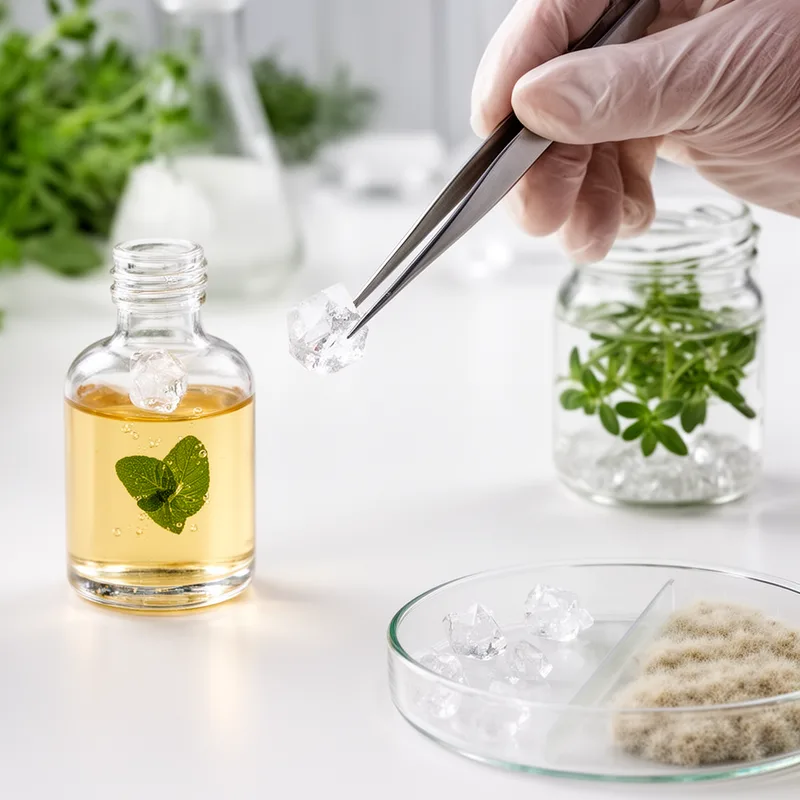
thyme camphor
- noun
- Specialized
- Doctors sometimes employ thyme camphor as an antifungal agent in medical treatments.
Examples
-
The laboratory used thyme camphor as a preservative for its botanical specimens.
-
Thyme camphor is valued in perfumery for its distinctive, aromatic fragrance.
-
The scientist used thyme camphor to preserve the specimen.
-
I bought some thyme camphors for my research.
-
Thyme camphor is commonly used in the cosmetic industry for its pleasant scent.
-
In laboratories, thyme camphor serves to preserve biological samples effectively.
-
The doctor recommended thyme camphor as a natural antiseptic for minor wounds.
Synonyms
A colorless solid used to preserve tissue and to kill germs in perfumes and medicine

A clear solid chemical with a pleasant smell used to kill germs and mold and to add scent to perfumes
Surface Forms
Morphology
thyme + camphor
The head noun 'camphor' provides the core meaning (a crystalline aromatic substance) and 'thyme' simply specifies source, scent, or variety, so the compound meaning can be derived compositionally. This noun‑noun modification pattern is common and cross‑linguistically recognizable, so a B1 learner who knows both words would be able to infer that 'thyme camphor' is a camphor related to or derived from thyme.
Etymology
The noun thyme camphor comes from the thyme plant and from the strong scent called camphor. It is a chemical that smells like camphor but is made from thyme, so the name helps you remember it is used in perfumes and in medicine to protect or preserve things.

