
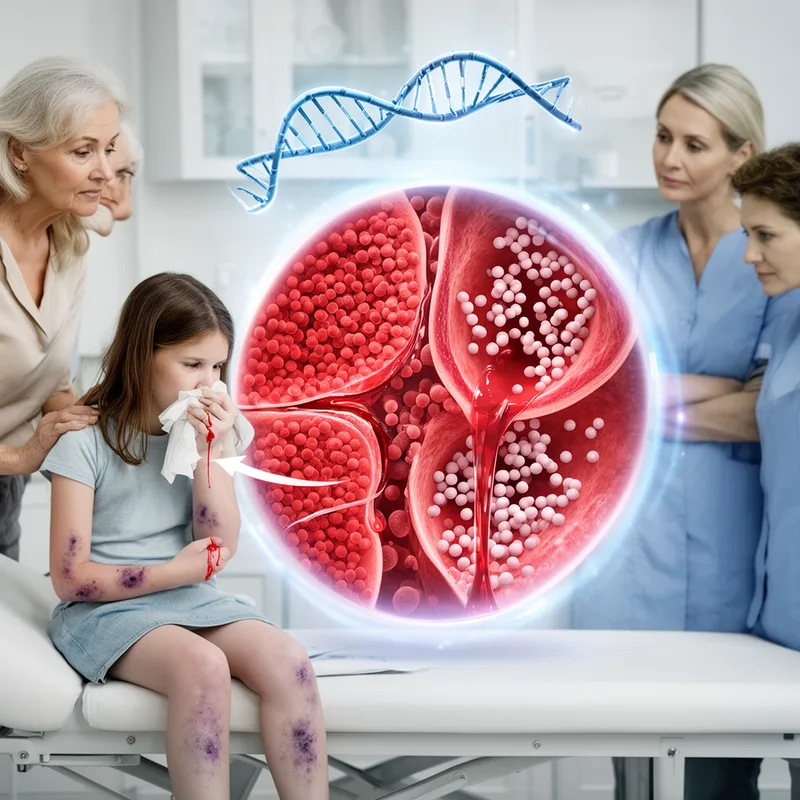
thrombasthenia


 1
9.9
- noun
- /θrɒmˌbæsˈθiːniə/
- Specialized
- Genetic testing confirmed that she suffered from thrombasthenia, explaining her history of frequent nosebleeds.
Examples
-
The patient was diagnosed with thrombasthenia after experiencing unexplained bruising and bleeding.
-
Because thrombasthenia affects platelet function, injuries can lead to prolonged bleeding.
-
Patients with thrombasthenia often experience prolonged bleeding.
-
Is thrombasthenia a genetic disorder?
-
People with thrombasthenia may experience prolonged bleeding after minor injuries.
-
Diagnosis of thrombasthenia often involves blood tests to assess platelet function.
-
Individuals with thrombasthenia require careful monitoring to manage their bleeding risk.
Surface Forms
Morphology
thrombasthenia = thrombocyte + asthenia (opaque) = thromb + asthenia
The components 'thromb' and 'asthenia' are specialized medical terms, making the overall meaning not immediately clear to learners.
Etymology
Thrombasthenia comes from thrombo- 'clot' and -asthenia 'weakness', so it literally means a 'weak clot'. It describes when the small blood parts that make clots do not work properly, which is why people with it bleed too much.