
thermoelastic
- adjective
- Specialized
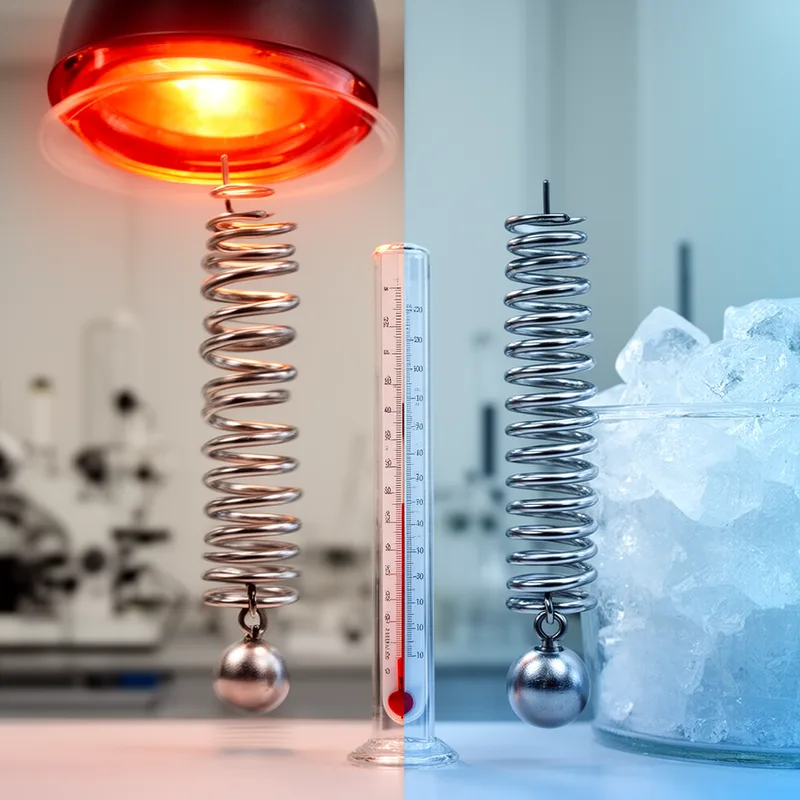
- The thermoelastic properties of the material allow it to expand and contract with changes in temperature.
Examples
-
His research has led to the development of the theory of nonlinear thermoelastic behavior of structural joints, which was honored with the ASME Blackall Award in 1989, and the development of a control system to compensate for the thermal deformation of machine tools.
Academic text (1998) -
He has made significant contributions to the development of thermoelastic solutions for fields in moving heat source problems.
Academic text (2007) -
The library consists of the material models elastic, isotropic, thermoelastic, and so on so on.
-
In engineering, understanding thermoelastic behavior is crucial for designing components that endure temperature fluctuations.
-
The scientist studied the thermoelastic effects in polymers to improve their performance under varying thermal conditions.
Surface Forms
Morphology
Etymology
The word thermoelastic combines the parts thermo- meaning 'heat', as in thermometer, and elastic meaning 'stretch' or 'able to return'. So, thermoelastic describes materials whose stretch or shape changes when they become hotter or colder.

