
thermochemical


 1
7.4
- adjective
- /ˌθɜrməˈkɛmɪkəl/
- Specialized
- This methodology, based on space and time-dependent probability density functions of thermochemical variables, turned out to be a powerful tool for the modeling and numerical simulation of both premixed and non-premixed combusting flows.
- thermochemical cycles
Examples
-
I just took three examples of the thermochemical conversion of biomass and combined biomass with assumptions.
-
Since there is heat produced during the combined thermochemical and photochemical processes, liberation of heat in excess of that required to start and continue hydrogen production allows system efficiency in excess of 100%.
Blog text (16) -
Water can be split in thermochemical cycles operating at elevated temperatures to facilitate the reaction kinetics.
Academic text (2004) -
Thermochemical recuperation of gas turbine exhaust energy, as shown in Figure 5, was also considered.
Academic text (1995) -
PHOTO (COLOR): Figure 5. Intercooled thermochemical recuperative cycle.
Academic text (1995) -
Biochemical conversion of lignocellulosic materials into secondary fuels and chemicals is less interesting compared to thermochemical conversion, due to low carbon conversion and slow conversion rates.
Academic text (2018) -
Fuel cells for transportation could use hydrogen or methanol produced through thermochemical gasification of biomass resources such as agricultural residues and dedicated plantations.
Academic text (1994) -
At high temperatures, thermochemical cycles must deal with the tradeoff between favorable reaction kinetics and aggressive chemical corrosion of containment vessels.
Academic text (2004) -
Electrolytic hydrogen is horribly expensive and inefficient; thermochemical hydrogen will require temperatures on the order of 830°C.
Blog text (32) -
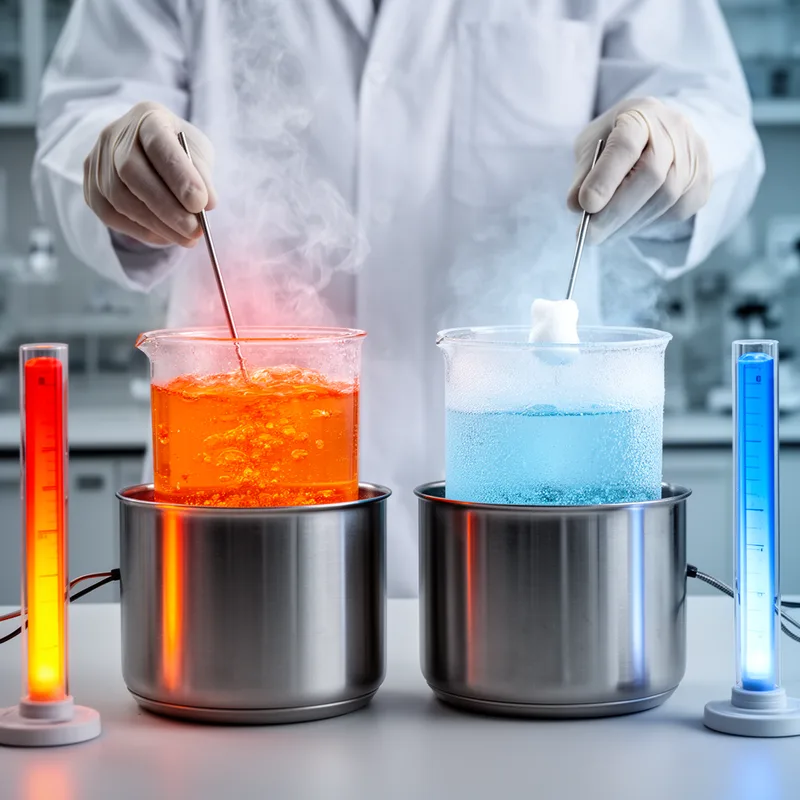
The researchers conducted a thermochemical analysis to understand the heat changes during the reaction.
Surface Forms
Morphology
thermochemical = chemical (semi-transparent) = thermo + chem + ical
The word is built by adding the scientific prefix 'thermo-' to 'chemical', but the resulting term is a specialized technical adjective rather than a fully everyday transparent expression.
Etymology
Thermochemical starts with thermo- meaning 'heat', the same root you see in thermometer, and ends with chemical meaning 'relating to chemistry'. So a thermochemical reaction is one that shows the heat given off or taken in during a chemical change.