

thermal resistor
- noun
- /ˈθɜrməl rɪˈzɪstər/
- Specialized
- The thermal resistor in the sensor compensates for temperature changes that might affect the readings.
Examples
-
When the device heated up, its thermal resistor altered the current flow as expected.
-
A thermal resistor is essential in temperature-sensitive circuits.
-
Engineers selected a thermal resistor to protect the circuit from overheating.
-
The thermal resistors in this device help maintain stable performance.
-
Engineers selected a thermal resistor to protect the circuit from overheating.
-
The thermal resistor in the sensor compensates for temperature changes that might affect the readings.
-
A thermal resistor is essential in temperature-sensitive circuits.
Synonyms


 1
8.0
1
8.0
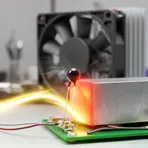
A small electronic part that changes how easily electricity flows with temperature to measure or control heat

A small electrical part that keeps current steady when temperature changes

An electrical part that keeps the flow of electricity steady when temperature changes
How Temperature-Sensitive
- Specialized
1
8.0

- Specialized
Surface Forms
Morphology
The meaning is directly built from 'thermal' (related to heat) + 'resistor' (an electrical element that resists current), so a learner can infer it is a resistor associated with temperature — for example one whose resistance changes with heat or is used for temperature compensation. This simple compositional pattern is common and cross-linguistically transparent, so a B1 learner who knows both constituents should grasp the basic meaning.
Etymology
Thermal resistor is a simple name: thermal means 'heat' and resistor is 'something that resists' the flow of electricity. Imagine a small part that resists electric current more when it gets hot and less when it is cool; that's why it 'changes resistance with temperature' and is used to protect or adjust a circuit when the temperature changes.