

thallus
- noun
- /ˈθæləs/
- Specialized
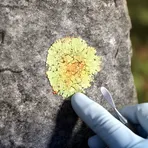
- Lichen thallus growth is polar, occurring at localized, usually peripheral, zones of growth.
- thallus of lichen
- thallus growth
- thallus tissue
Examples
-
An examination of the thallus anatomy of macrolichens often reveals further plant-like features.
Academic text (2001) -
The presence of diffuse growth in at least some lichens raises fundamental questions about the mechanisms of thallus growth at the cellular level.
Academic text (2001) -
The lichen thallus is poikilohydric:
Academic text (2001) -
Their development is often much more extensive than would be expected of a structure that merely fixes the thallus to the substrate.
Academic text (2001) -
The reticulate thallus of the lace lichen provides the most dramatic example of diffuse growth.
Academic text (2001) -
The lichen thallus extends the province of plant morphology from the organismal to the superorganismal level.
Academic text (2001) -
Many lichens produce a simple crustose thallus intimately attached to the substratum, as do certain species of red and brown marine algae (Figure 5).
Academic text (2001) -
The gelatinous lichens are exceptional in that the algal symbiont is the predominant structural component of the thallus.
Academic text (2001) -
In most lichens, it is the fungus that builds the structural tissues of the thallus (body), as well as the characteristic fungal fruiting structures.
Academic text (2001) -
The thallus of the algae is a fascinating example of plant adaptation to aquatic environments.
Compounds
Surface Forms
Etymology
Thallus comes from the Greek thallos, which means 'a young shoot' or 'sprout'. So thallus is used for a simple plant body, like algae, fungi, or lichens, that looks like a green shoot rather than a plant with roots, stems, and leaves.

