
terrigenous
- adjective
- /tɛˈrɪdʒənəs/
- Specialized
 :
terrestre
:
terrestre
Examples
-
The facies that make up the continental shelf are the platform (silt and clay) and continental muds, sands (quartzose and bioclastic), terrigenous gravel, and shells.
Academic text (2018) -
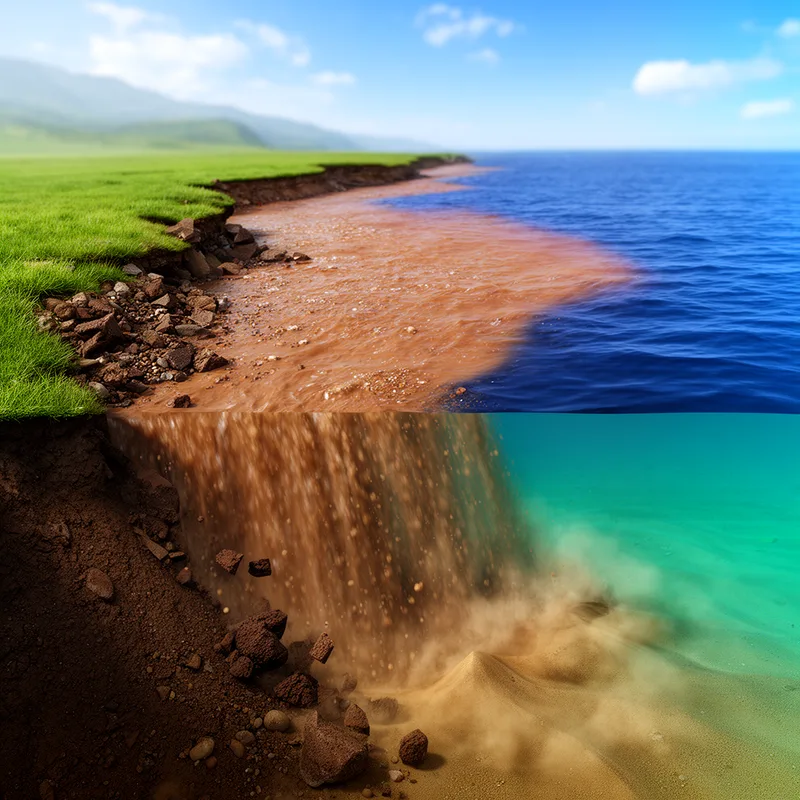
The river contributed terrigenous material to the surrounding ocean, shaping the coastal landscape over time.
-
Scientists studied terrigenous sediments to understand how land erosion affects marine environments.
-
During the storm, terrigenous debris was swept into the sea, altering the underwater ecosystem.
Synonyms

 17
5.2
17
5.2

Relating to land or to things that live on land rather than in water


 1
9.9
1
9.9
Relating to land rather than to the sea or air

Relating to the land rather than the sea or air
Surface Forms
Morphology
Etymology
The word terrigenous comes from the root terra, which means 'land' and is the same root you see in terrain. So, terrigenous is a handy word for things like sand or soil that are 'from the land', especially when rivers or wind carry them into the sea.