
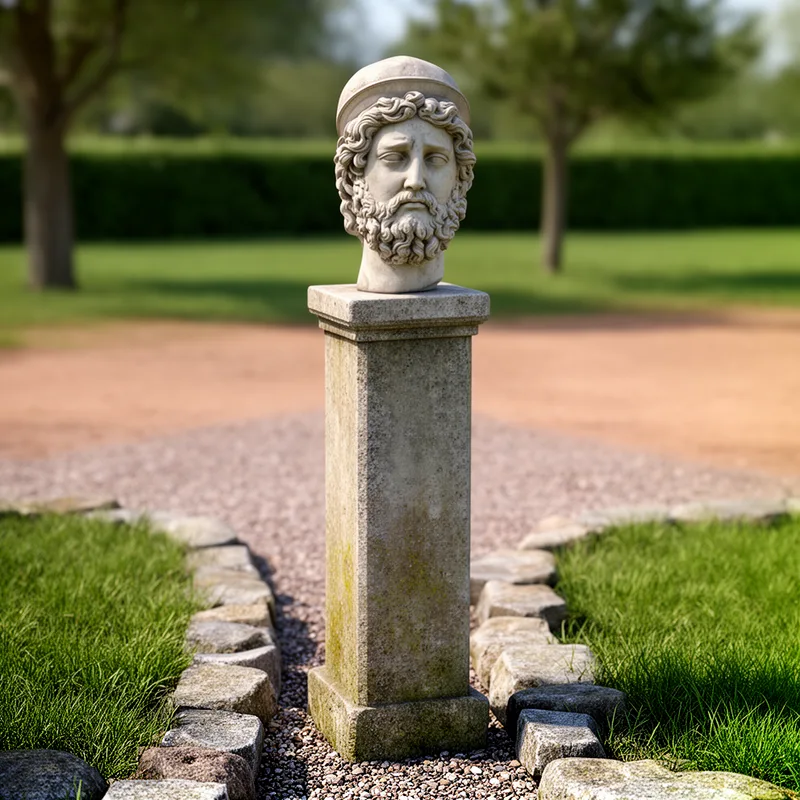
terminal figure
- noun
- Specialized
 :
figura terminal
:
figura terminal
- A terminal figure of Hermes was placed at crossroads in classical Rome.
Examples
-
Many ancient ruins feature terminal figures as boundary markers.
-
The ancient garden was adorned with a terminal figure marking its border.
-
Museum visitors marveled at the craftsmanship of the restored terminal figure.
-
The terminal figure on the column was beautifully crafted.
-
A terminal figure of an eagle stands proudly atop the pillar in the ancient temple.
-
The architect decided to include a terminal figure to enhance the beauty of the building's entrance.
-
Visitors took photos beside a terminal figure that represented a lion, symbolizing strength and courage.
Synonyms

 234
3.1
234
3.1

The shape of a person's body
 5
9.9
5
9.9
A carved statue or bust on top of a pillar that marks a boundary

A carved statue on top of a square pillar that marks a boundary in ancient Rome
Surface Forms
Morphology
A learner who knows 'terminal' = 'occurring at an end' and 'figure' = 'a visible shape/statue' can infer a meaning like 'a figure placed at an end or endpoint', so there is a clear compositional clue. However the specific architectural sense (a statue carved at the top of a square pillar used as a boundary marker) is specialized and not fully predictable from the constituents alone, so the expression is only partly transparent to a B1 learner.
Etymology
Terminal figure comes from ancient Rome. People put a carved figure, a head or an animal, on the terminal, or 'end', of a square pillar to mark the edge of a road or a field. So the phrase means 'a statue placed at the end or top of a pillar'.