
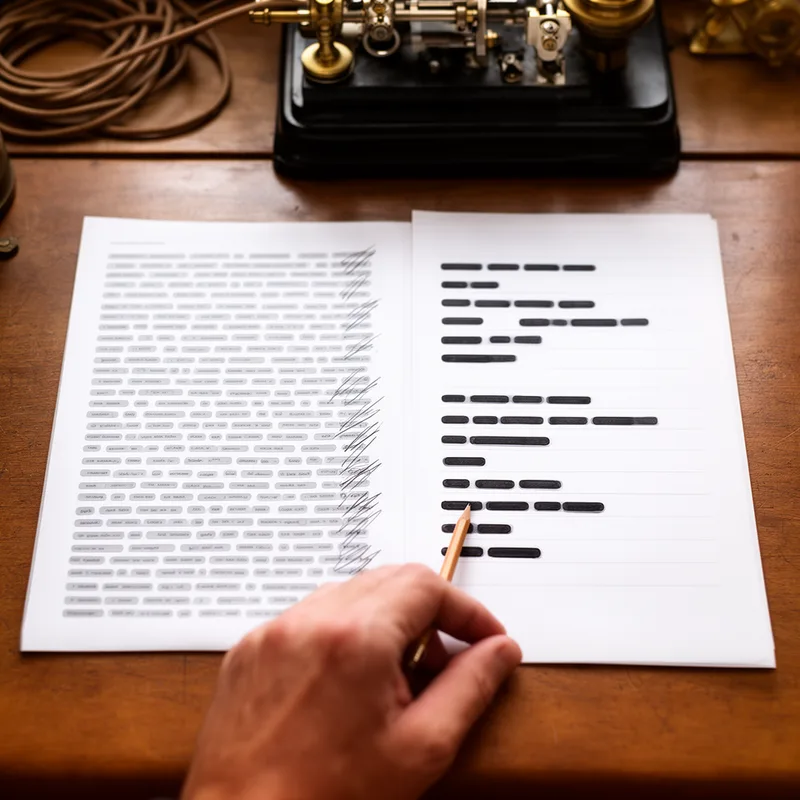
telegraphese
- noun
- /ˌtɛlɪˈɡræfiːz/
- Archaic
- To make communication faster, she often used telegraphese, eliminating all unnecessary words.
Examples
-
His message was written in a form of telegraphese, with only the most essential details included.
-
It sounds like you have an interesting question, but your telegraphese is much too dense for me to puzzle out.
Blog text (11) -
The report was so concise that it resembled telegraphese, leaving out everything except the crucial facts.
Synonyms

 1
5.5
1
5.5

Saying something clearly with few words
 1
6.7
1
6.7
Saying a lot with very few words


 1
6.3
1
6.3
The quality of expressing ideas clearly using few words

To say or write something using very few words
How Concise

Surface Forms
Morphology
Etymology
The word telegraphese comes from telegraph, which means 'writing over a long distance', plus the ending -ese (like in Chinese) that marks a 'language' or style. Because old telegrams were charged by the word, people left out small words to save money and space, so telegraphese means a very short, spare way of writing.