
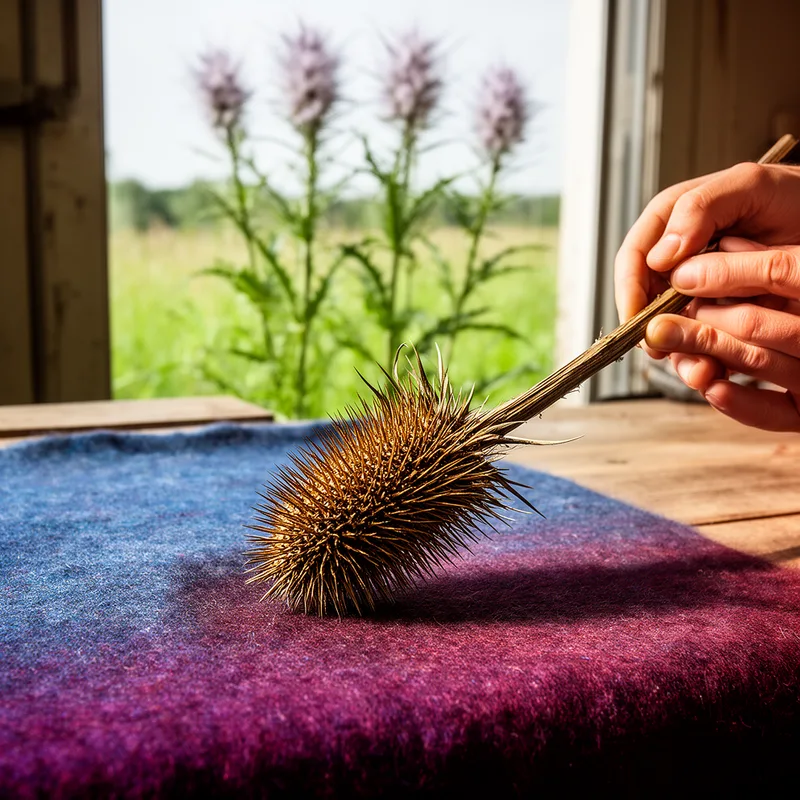
teasel


 1
9.9
- noun
- /ˈtiːzəl/
- Farmers sometimes grow teasels because they were historically used in textile processing to raise the nap of the fabric.
- teasel (genus Dipsacus)
Examples
-
" Eleyna! The boy is getting in a teasel!" Eleyna bustled into the middle room, thrusting the flask and a food pack into Hwyllum's hand.
Fiction book (1993) -
Single- and double-headed implements are used, and today metal versions are taking the place of the teasel head, particularly on the less expensive models of chechia (Fig. 10).
Academic text (2004) -
The teasels sprang up, and with them, the chechia industry was born.
Academic text (2004) -
This well-written article is actually about photographing plants called teasels, but you get the point.
Academic text (1993) -
"With that, she led him to her spinning chamber, bade him to take up wool and distaff, teasel and spindle, and to sit at her wheel and spin thread.
Fiction book (1995) -
She turned back to the walls—a blown sheep on moorland, a huge black bull staring furiously out of the canvas, a fragile bunch of teasels.
Fiction book (1998) -
The teasel is known for its tall, prickly stems and unique flower heads that attract various insects.
-
In the countryside, patches of teasels stand out with their spiky bracts and vibrant flowers.
Synonyms
 1
9.9
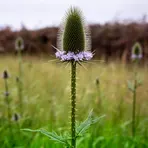
A tall prickly wild plant with spiky flower heads
 1
9.9
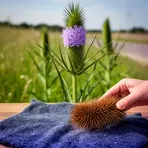
A tall plant with lilac spiky flower heads used to brush wool cloth

A prickly wild plant with round flower heads used in dried flower arrangements

A tall wild plant with spiny flower heads once used to make cloth soft

A prickly plant with spiny flower heads once used to roughen wool cloth
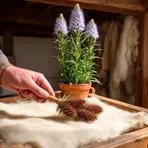
A tall prickly plant with cone-shaped flower heads once used to brush wool cloth to make it soft

A prickly plant with lilac flowers and spiky dried heads used by weavers to finish wool cloth
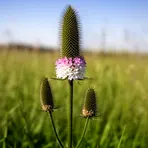
A tall wild plant with prickly seed heads and pink or white flowers
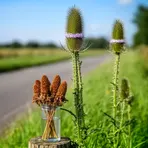
A tall prickly plant with cone-shaped flower heads often dried for decoration
Compounds
A prickly plant with lilac flowers and spiky dried heads used by weavers to finish wool cloth
- Specialized
A tall prickly plant with cone-shaped flower heads once used to brush wool cloth to make it soft
Surface Forms
Etymology
The word teasel comes from the plant's use in cloth-making: its dried, spiky heads were used to 'tease' or 'lift' the soft wool fibers, so think of teasel as the plant that 'teased' cloth.