
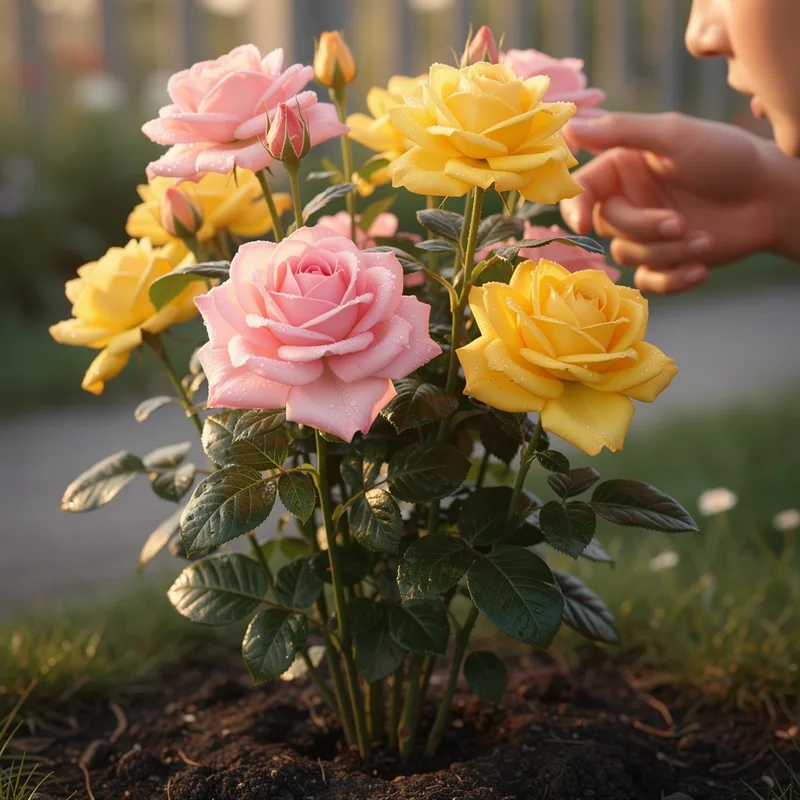
tea rose
 1
3.8
1
3.8

- noun
- /ti roʊz/
- A garden designed by a woman in her 80s laid out with hybrid tea roses and tree specimens planted to represent heaven and hell.
- hybrid tea rose
- pink tea roses
- tall hybrid tea rose
Examples
-
It's a climbing tea rose, kind of common but I've always loved it.
-
All the roses in our garden are blooming at the moment: pale pink tea roses, deep red Mr. Lincoln's, icy whites, and my favorite, the old-fashioned roses in a gentle yellow.
Blog text (2) -
- I think she likes tea roses.
-
" I go to the box and remove a beautiful arrangement of tea roses in shades of pink.
Fiction book (2000) -
We're making a tea-rose garland.
-
An account of tea roses in a vase on the table perhaps comes closer to generalized you: "When you looked into them without blinking, it was like getting drawn into them; it was like a spell, getting drawn into folds and folds of red."
Academic text (1994) -
Carpetbaggers and sponge-throwers conferred in back alleys; charcoal-browed beauticians stopped tending their tea roses to give out free samples and advice.
Fiction book (1997) -
In my garden, the tea rose bush produces large, fragrant pink flowers all summer.
-
The aroma of the tea rose filled the air as we walked through the garden.
-
She admired the beautiful tea rose in full bloom, its petals glistening in the sunlight.
Synonyms
 469
1.0
469
1.0
A bush with bright, often scented flowers and thorns
 5
1.0
5
1.0
A bush that grows roses

A Chinese rose with pink or yellow flowers and a sweet tea smell
How Fragrant

Surface Forms
Morphology
tea + rose
The compound 'tea rose' is compositionally built from 'tea' + 'rose' where 'tea' specifies a characteristic/origin of the rose (tea-scented/Chinese-derived), so a learner who knows both words can infer it denotes a type of rose. This follows a common noun+noun naming pattern for plants across languages, making the meaning accessible without prior exposure.
Etymology
Tea rose may come from roses brought from China whose flowers smelled a little like brewed tea. Gardeners called the plant a tea rose, and today the name means a garden rose known for its tea-like scent.