
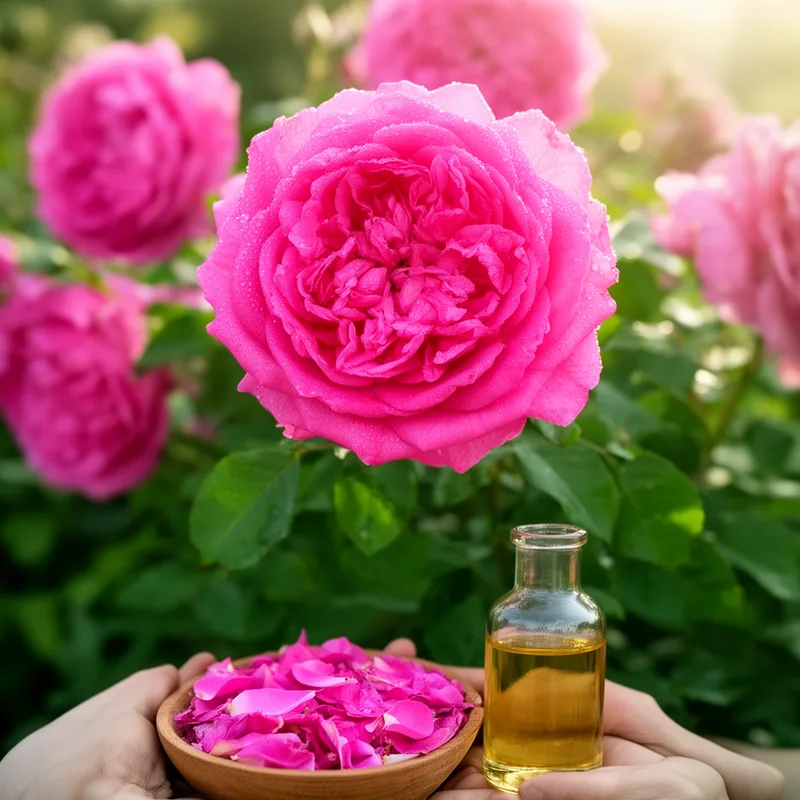
damask rose
- noun
- /ˈdæm.æsk roʊz/
- Many perfumers value the oil extracted from the damask rose for its rich scent and quality.
Examples
-
Damask rose was her favorite.
Fiction book (1994) -
It has lavender, rose, neroli, damask rose and eucalyptus in it as well, which as most people will know who care about those kind of things in skin care ingredients.
-
The garden was filled with the beautiful blooms of the damask rose, their sweet fragrance enchanting everyone who passed by.
-
She planted several damask roses in her backyard to create a fragrant and colorful space.
Synonyms
A pink rose with a strong sweet smell that people grow for perfume and rose oil
A large pink rose with a very strong smell, grown for perfume
How Fragrant


Surface Forms
Morphology
damask + rose
The compound is compositional: 'damask' serves as an adjectival modifier indicating origin/type (Damascus/Damascene) and 'rose' names the flower, so a learner who knows both words can infer it denotes a kind of rose associated with Damascus. Cross‑linguistic equivalents (e.g., French 'rose de Damas', Spanish 'rosa de Damasco') make this logic transparent, even if the specific botanical details (fragrance, oil production) are not fully deducible.
Etymology
Damask rose comes from the city of Damascus, because damask once meant 'from Damascus'. Traders brought this very fragrant rose and its oil to Europe, so today damask rose means the sweet, strongly scented rose used for perfume.