
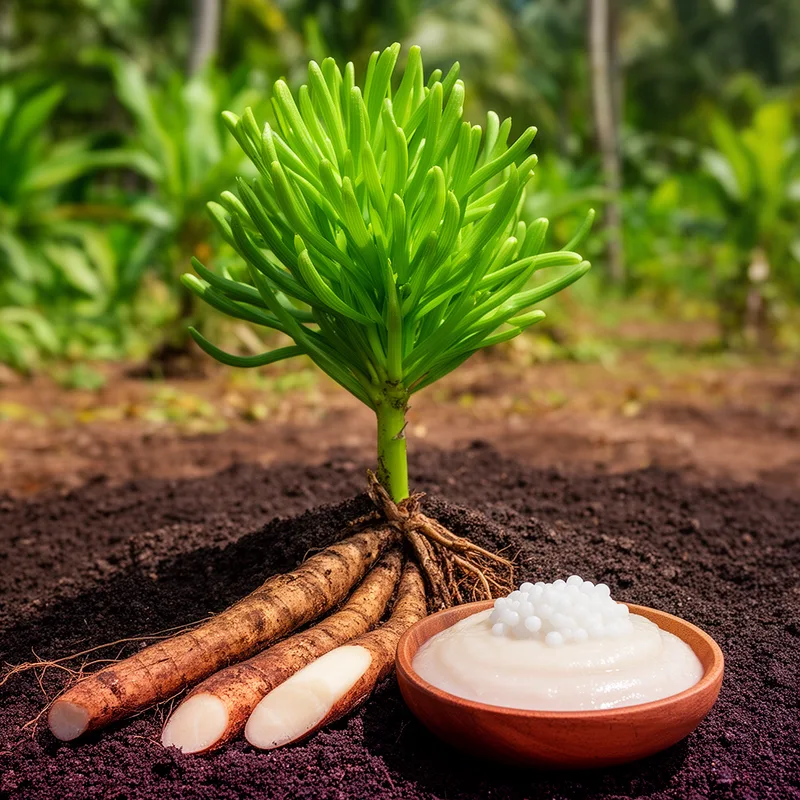
tapioca plant
- noun
- /ˌtæpiˈoʊkə plænt/
- Traditional puddings are made from starch extracted from the tapioca plant.
Examples
-
Farmers in the region grow the tapioca plant for its starchy roots.
-
The tapioca plant thrives in tropical climates with well-drained soil.
-
The tapioca plant thrives in tropical climates.
-
Have you ever seen a tapioca plant growing?
-
Farmers in the region grow the tapioca plant for its starchy roots.
-
The tapioca plant thrives in tropical climates with well-drained soil.
-
Traditional puddings are made from starch extracted from the tapioca plant.
Synonyms

 6
6.3
6
6.3

A tropical plant with large starchy roots used for food
 1
7.5
1
7.5
A tropical plant with thick starchy roots used for food
 1
3.5
1
3.5
A tropical plant with thick starchy roots eaten like potatoes


 1
7.5
1
7.5
A tropical plant with a large starchy root used for food and to make flour

A tropical plant with long edible roots that people use to make tapioca and flour
A plant with thick edible roots used to make food and products like tapioca
A tropical plant with large starchy roots used for food and to make tapioca
Surface Forms
Morphology
tapioca + plant
The compound simply names the plant that produces tapioca, so its meaning is directly derivable from combining 'tapioca' (the starchy product) with 'plant' (the organism). This noun-noun compositional pattern is common and cross-linguistically regular, so a B1 learner who knows both constituents would understand it.
Etymology
The noun tapioca plant comes from an old Brazilian word for the white starchy food made from cassava roots. People rubbed and washed the roots until a white 'starch' or 'foam' called tapioca appeared, so the plant is named for its starchy roots used to make tapioca today.