

Manihot esculenta


 1
7.5
1
7.5
- noun
- Specialized
- The roots of Manihot esculenta are processed to produce flour and tapioca pearls.
Examples
-
Manihot esculenta is widely cultivated in tropical regions for its nutritious roots.
-
Researchers study Manihot esculenta to improve food security in developing countries.
-
The Manihot esculenta plant thrives in tropical climates.
-
Many farmers grow Manihot esculenta for its nutritious roots.
-
Many people around the world rely on Manihot esculenta as a primary source of nutrition due to its rich starchy roots.
-
The farmers in tropical regions cultivate Manihot esculenta for its edible roots, which are often used to make cassava flour.
-
In some countries, Manihot esculenta is a staple food, commonly prepared as a delicious side dish or main ingredient in various recipes.
Synonyms
 6
6.3
6
6.3
A tropical plant with large starchy roots used for food
 1
7.5
1
7.5
A tropical plant with thick starchy roots used for food
 1
3.5
1
3.5
A tropical plant with thick starchy roots eaten like potatoes

A plant with long edible roots grown for its starch used to make tapioca
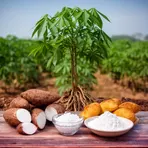
A plant with thick edible roots used to make food and products like tapioca

A tropical plant with large starchy roots used for food and to make tapioca

A tropical plant with long edible roots that people use to make tapioca and flour

A South American plant with large roots that people eat and leaves that feed animals

A type of cassava with bitter roots that contain poison and must be processed before eating
Surface Forms
Morphology
Manihot + esculenta
This binomial name is compositionally transparent: it combines the genus name Manihot (a botanical group that includes cassava) with the specific epithet esculenta (Latin for 'edible' or similar), so the phrase literally denotes the edible Manihot species (cassava). Scientific Latin names follow predictable composition patterns across languages, so a learner who knows both constituents can infer the referent without special idiomatic knowledge.
Etymology
The plant name Manihot esculenta likely comes from a native word seen in Manihot, meaning 'cassava', plus the Latin word esculenta meaning 'edible'. So the name is a simple clue that this is the edible cassava plant, grown for its starchy roots and used to make foods like 'tapioca'.