
synthetase


 1
8.4
- noun
- /sɪnˈθeɪteɪs/
- Specialized
- In the second step, glutathione synthetase (GS) adds glycine to glutamyl-cysteine to form glutathione.
- glutamine synthetase
- synthetase gene
Examples
-
Ammonium can be incorporated into glutamate via glutamine synthetase (GS) to form glutamine (Figure 2).
Academic text (1993) -
But there's amino acid tRNA synthetase and the tRNA for this alkyne.
-
When cells are exposed to growth in medium without glutamine, the glutamine synthetase gene expression is increased.
Academic text (2017) -
Well, your amino acid tRNA synthetases are not AAA plus ATPAS.
-
(n9) Moreover, because they are both prostaglandin synthetase inhibitors, ibuprofen and naproxen could, in theory, cause premature closure of the ductus arteriosus.
Academic text (2003) -
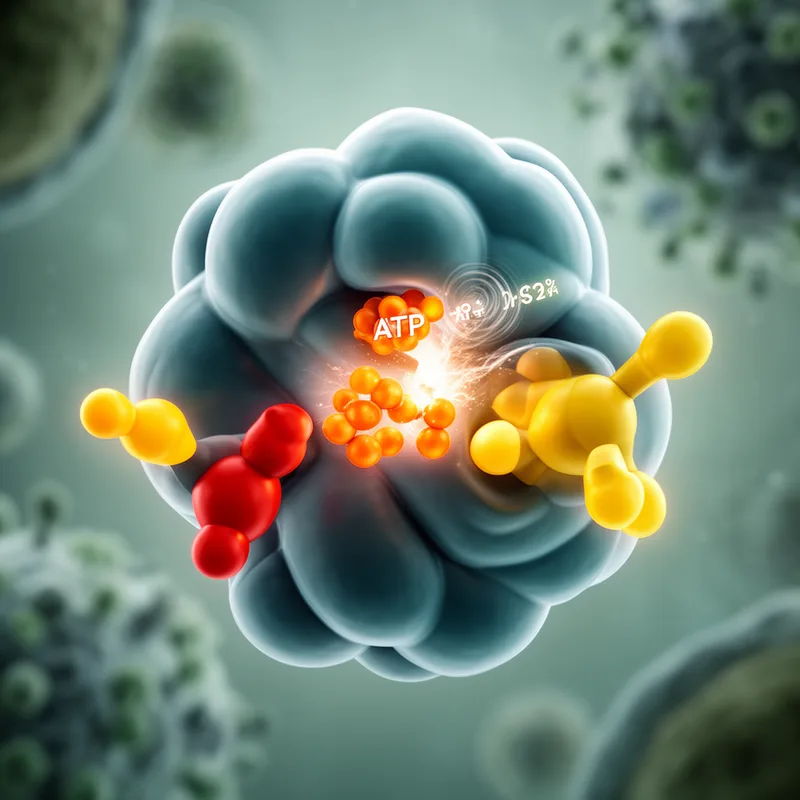
The enzyme synthetase helps in forming complex molecules by utilizing energy from ATP.
-
Researchers studied the activity of synthetase to understand its role in metabolic pathways.
-
The plant produces a specific type of synthetase that synthesizes essential amino acids.
Synonyms
 1
8.4
A protein that joins two pieces of DNA or other molecules together
Surface Forms
Morphology
synthetase = synthesis (semi-transparent) = synthet + ase
The root relates to 'synthesis' (making/combining) and '-ase' denotes an enzyme, but understanding requires knowledge of the specialized suffix '-ase' used in biochemistry.
Etymology
Synthetase comes from synthesis, which means 'to put together', and the enzyme ending -ase, which means 'enzyme'. So a synthetase is an enzyme that 'puts things together', linking molecules using energy.