
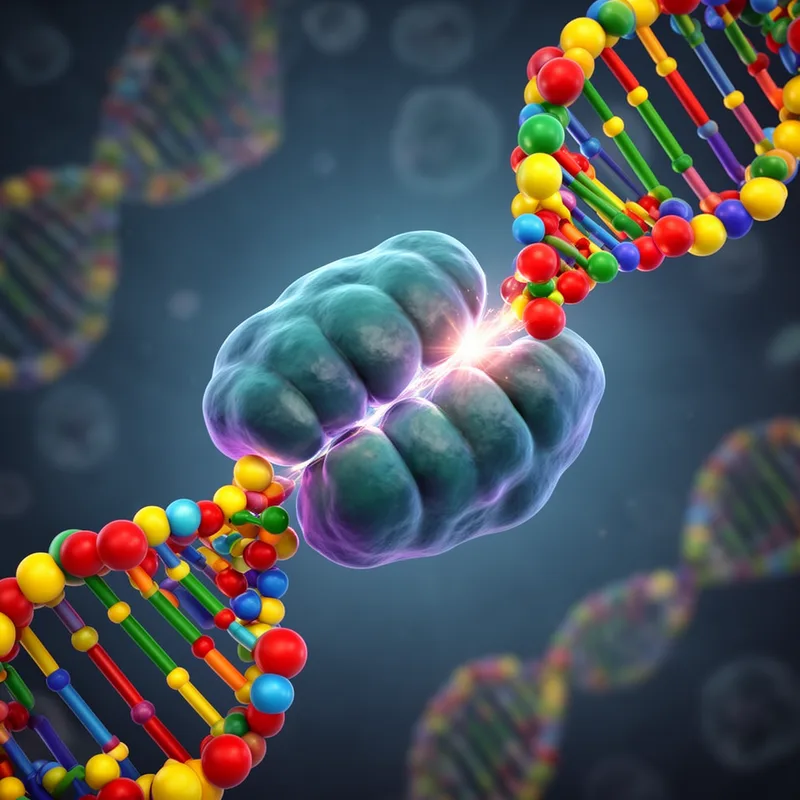
ligase


 1
8.4
- noun
- /ˈlaɪɡeɪz/
- Specialized
- Researchers rely on ligase enzymes to connect nucleotides during the process of DNA repair.
- E3 ligase
- ubiquitin ligase
Examples
-
We'll use a ligase other than T4.
-
In the same study, the X-linked gene Rnf12, which encodes the ubiquitin ligase Rnf12/RLIM, is identified to be a critical survival factor for milk-producing alveolar cells 23.
Blog text (26) -
We add ligase, and what does ligase do for a living?
-
An enzyme called exactly so ligase does the ligation.
-
The presence of tuberculous bacilli was confirmed by ligase chain reaction (LCR) assay.
Academic text (2006) -
For instance, in the MON810 maize, the insertion of the transgene in the ubiquitin ligase gene caused a complex recombination event, leading to the synthesis of new RNA products encoding unknown proteins.
Blog text (14) -
The DNA ligase is crucial for sealing the gaps between DNA fragments during replication.
-
A specific ligase can efficiently join the ends of two DNA strands in molecular biology experiments.
Synonyms
 1
8.4
A protein that joins two molecules using energy from ATP
Surface Forms
Morphology
Etymology
The word ligase comes from the Latin ligare, meaning 'to bind', plus the enzyme ending -ase. You can see the same root in ligament, so a ligase is literally an enzyme that 'binds' or joins molecules together, for example pieces of DNA.