
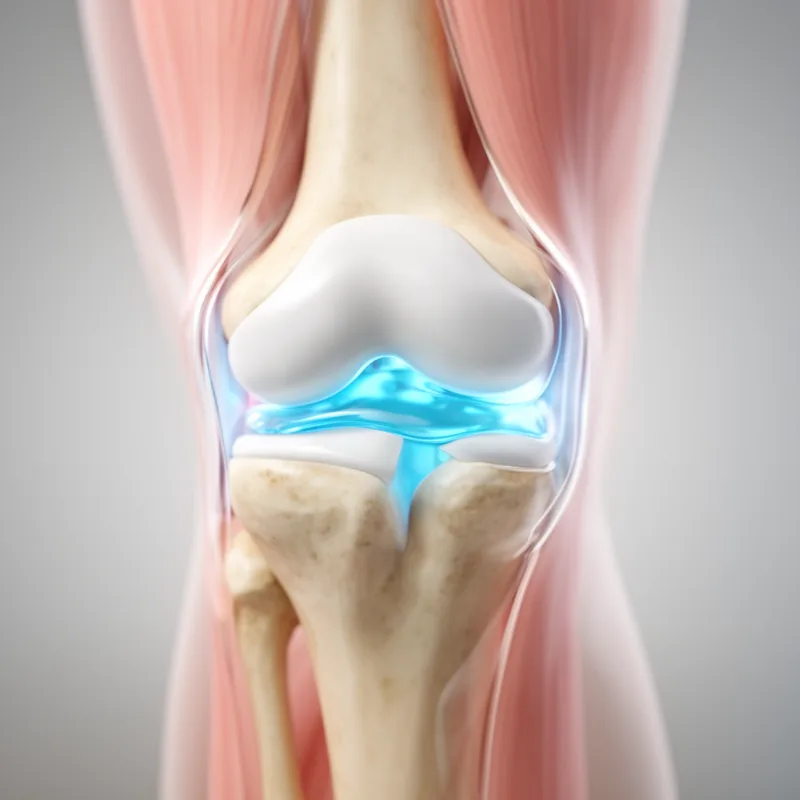
synovial joint
- noun
- /sɪˈnoʊviəl dʒɔɪnt/
- Specialized
 :
articulación sinovial
:
articulación sinovial
- These are synovial joints, which allow for a range of motion of the spine.
Examples
-
The wrist and elbow are examples of synovial joints that allow for a wide range of motion.
-
Osteoarthritis (OA), a degenerative joint disease affecting articular cartilage and synovial joint fluid, is the most common of the rheumatic diseases.
Academic text (2002) -
Rheumatoid arthritis is an inflammatory condition that affects multiple synovial joints.
Academic text (2012) -
The wrist, the elbow, the finger, the shoulder, and the knee are all synovial joints, and they have superior mobility, but they are vulnerable to arthritis.
-
It is an atypical synovial joint with a well-innervated joint capsule (64).
Academic text (1997) -
OA can be found in any synovial joint, but major weight-bearing joints such as hips and knees affected by OA can have an impact on the workforce, particularly in a manual occupation.
Academic text (2015) -
The knee joint is an example of a synovial joint that facilitates movement.
-
Rheumatoid arthritis can severely impact multiple synovial joints in the body.
Synonyms

A joint between two bones that moves freely and has fluid inside

A joint that moves freely, like the shoulder, hip or knee, with bones separated by a fluid-filled space
How Mobile
- Specialized

- Specialized
- Specialized
 1
7.9
1
7.9

- Specialized
Surface Forms
Morphology
The phrase is fully compositional: 'synovial' (relating to synovial fluid/lubrication) simply modifies 'joint' (a point where bones articulate), yielding a joint that has synovial fluid and allows smooth movement. Although 'synovial' is a technical term, if a learner knows both constituent meanings the combined sense is directly derivable and follows normal English modifier+noun composition.
Etymology
The term synovial joint comes from an old medical word: synovial was used for the slippery, 'egg-white' fluid found inside some joints. That's why a synovial joint means a joint with smooth, slippery fluid that helps the bones move easily.