

to syllabify
- verb
- /ˈsɪl.ə.baɪ.faɪ/
- Specialized
- You can syllabify the word 'photograph' by saying it as 'pho-to-graph'.
Examples
-
In order to help children read, teachers often syllabify difficult words.
-
The software can automatically syllabify any text you enter.
-
Linguists sometimes syllabify foreign words before analyzing their structure.
-
Please syllabify the word for me.
-
The teacher syllabified the difficult words in class.
-
Teachers often syllabify difficult words to help children improve their reading skills.
-
Linguists syllabify unfamiliar words to illustrate their phonetic structure.
Synonyms
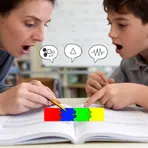
To split a word into parts you can say separately

To say a word in separate sound parts out loud
How Formal
- Specialized

- Specialized
Surface Forms
Morphology
Etymology
Syllabify comes from syllable, a word part that is a small 'unit of sound', and the ending -ify, which means 'make', as in simplify. So, to syllabify is to 'make' the syllables visible, in other words to divide a word into its syllables.

