

syllable
 66
1.1
66
1.1

- noun
- /ˈsɪl.ə.bəl/
- A child first learned to trace letters, then syllables, then words, and finally sentences.
- stressed syllable
- unstressed syllable
- weak syllable
Loading YouTube…
Watch on YouTubeI hated every syllable of that story.
- I hated every syllable of that story.
- How else to read poetry but syllable by syllable, word by word, line by line.
- He also gives the example of words and syllables and letters.
- Or you're speaking a foreign language and you're saying syllables that just sound weird.
- Then we put them together to create syllables, right?
- Crayon with two syllables sounds like crayon.
- So if we take a particular syllable like La La Li, La La.
- I just, I just got to the syllables the wrong way round.
- I never thought that that two syllables optics.
- They represent syllables and occasionally entire words.
Examples
-
How else to read poetry but syllable by syllable, word by word, line by line.
-
There were a few words of more than one syllable there.
-
Can you read these two syllable words?
-
OK, the first syllable of the second word.
-
So we could take the same syllable YA, which with that tone means tree.
-
Students are confronted with two languages that use the same syllables to mean different things.
Academic text (2011) -
"Oh!" she said, investing the syllable with the maximum of shock and dismay.
Fiction book (1994) -
A word is a certain form that's composed of letters or syllables or however you want to frame it.
-
l didn't know "athlete" had three syllables.
-
The word 'banana' has three syllables when pronounced.
Compounds




- Specialized
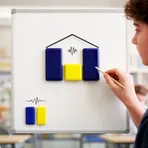
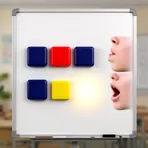
A syllable with a long vowel, two vowel sounds together, or a final consonant that sounds stronger



How Complex
- Specialized

- Specialized
66
1.1
- Specialized
Surface Forms
Etymology
Syllable comes from Greek parts meaning 'together' and 'to take', from the parts syn- and lambanein. So a syllable is a group of sounds 'taken together' as one unit, which is why you can clap once for each syllable in a word.