

swampy beggar-ticks
- noun
- Specialized
- Watch out for swampy beggar-ticks; their seeds will cling to your socks if you walk through the marsh.
Examples
-
The swampy beggar-ticks bloom in late summer.
-
Many bird species feed on the seeds produced by swampy beggar-ticks in the late summer.
-
The swampy beggar-ticks are thriving in the wet meadows after the heavy rains this spring.
-
Look out for swampy beggar-ticks!
-
Many bird species feed on the seeds produced by swampy beggar-ticks in the late summer.
-
The swampy beggar-ticks are thriving in the wet meadows after the heavy rains this spring.
-
Watch out for swampy beggar-ticks; their seeds will cling to your socks if you walk through the marsh.
Synonyms

A plant like a bur marigold that grows in wet fields in eastern and northern North America

A plant with yellow flowers and small prickly fruits that stick to fur or clothing

A plant with small sticky seeds that attach to clothes or animal fur
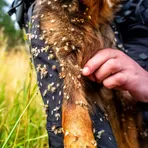
Small sticky seeds that cling to animal fur or clothes
Surface Forms
Morphology
swampy + beggar-ticks
Although 'swampy' clearly indicates a wet habitat, the core noun 'beggar-ticks' is a conventional plant name whose meaning (a plant with sticky, clinging seeds) is not derivable from the literal words 'beggar' and 'ticks' and is not found in the supplied dictionary entry. Because the identity and botanical sense of the compound are idiomatic and unpredictable to a B1 learner who only knows the constituents, the overall MWE is opaque.
Etymology
Swampy beggar-ticks is named for the plant's sticky seeds. The seeds have little hooks that grab onto clothes or animal fur like tiny ticks or cling like a needy beggar, and the word swampy shows it grows in wet places, so the name helps you remember it's a marsh plant whose seeds will 'stick' to you.

