
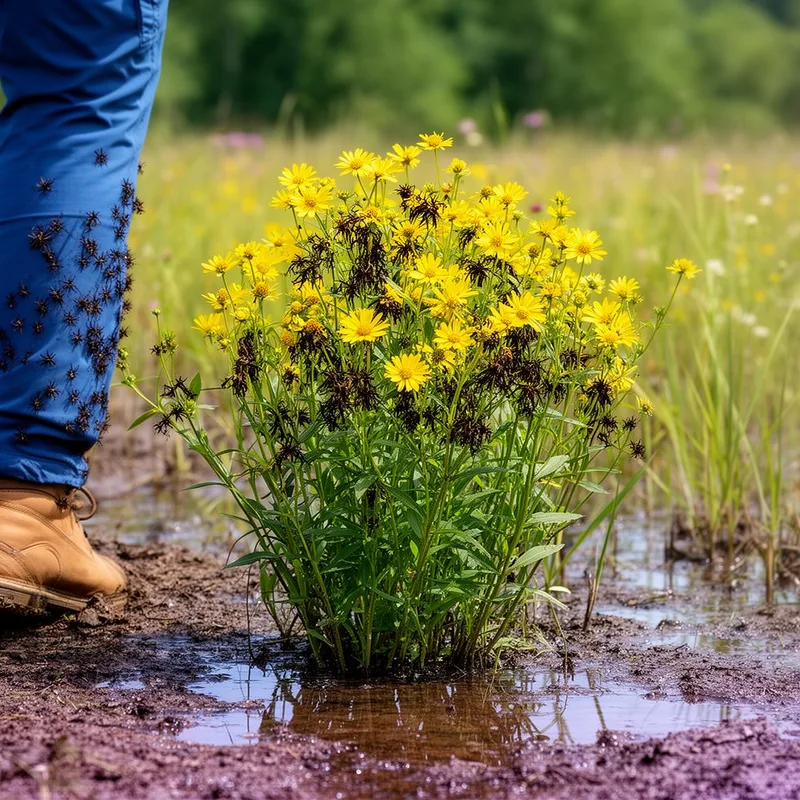
Bidens connata
- noun
- Specialized
- Bidens connata is commonly found in wet pastures and meadows in eastern and northern United States.
Examples
-
The hooked seeds of Bidens connata easily stick to clothing and animal fur.
-
Botanists surveyed a meadow and recorded the presence of Bidens connata among other wildflowers.
-
Bidens connata thrives in wetlands across eastern North America, often forming dense colonies.
-
The Bidens connata thrives in wet meadows.
-
Have you seen the Bidens connatae blooming this spring?
-
In early summer, Bidens connata produces bright yellow flowers in marshy areas.
-
Farmers often recognize Bidens connata for its rapid growth in wetland environments.
Synonyms

A plant that grows in wet places with yellow flowers and seeds that stick to clothes

A plant with yellow flowers and prickly seeds that stick to fur or clothes

A plant with yellow flowers and prickly seeds that stick to fur or clothing
Surface Forms
Morphology
Bidens + connata
This is a Latin binomial (genus + specific epithet) used as a scientific species name; the second element is not a standard English word and the overall label is a convention rather than a compositional phrase. A B1 learner who knows the listed constituents would not be able to derive 'a species of bur marigold found in wet meadows' from 'Bidens' + 'connata' without specialized botanical or Latin knowledge, so the expression is opaque.
Etymology
Bidens connata comes from Latin words: Bidens means 'two-toothed' and connata means 'joined together'. One popular image is the plant's two small hooked seeds that often stick to clothes and animal fur, so the name refers to this sticky meadow plant.

