
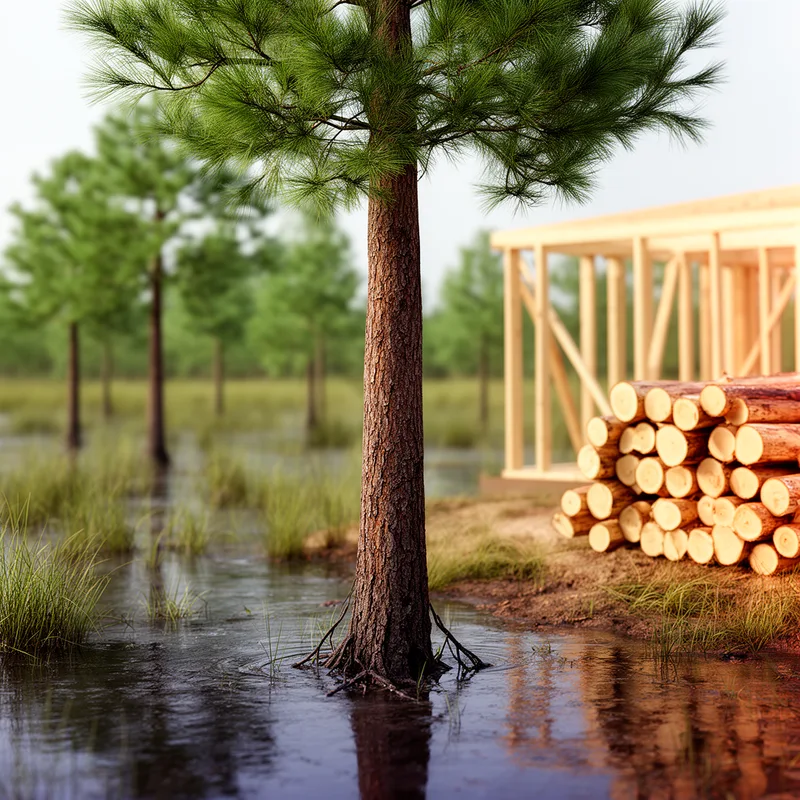
swamp pine
- noun
- /swɑmp paɪn/
- US
- The dense stand of swamp pine provided shelter for a variety of wetland animals.
Examples
-
Many conservation efforts focus on preserving natural habitats like the swamp pine forests of the Southeast.
-
The timber industry often relies on species such as swamp pine for pulpwood and construction lumber.
-
The swamp pine grows well in wet areas.
-
Many swamp pines can be found in southern wetlands.
-
The swamp pine trees thrive in the humid conditions of the coastal wetlands.
-
Wildlife such as birds and frogs find refuge among the tall swamp pine trees in the marsh.
-
In the southern United States, the swamp pine is commonly seen along rivers and bayous.
Synonyms
 1
6.6
1
6.6

A tall pine tree from the southeastern United States with very long needles and rough red-brown bark


 1
8.1
1
8.1
A tall pine tree in the southern United States with long needles in groups of three and reddish-brown bark

A large tree with long needles that grows in wet sandy areas of the southeastern United States
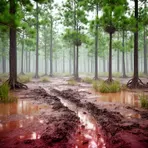
A muddy swamp where pine trees often grow
Surface Forms
Morphology
The meaning is directly compositional: 'swamp' (wet, marshy area) modifies 'pine' (a type of tree), so the phrase denotes a pine that grows in swamps. This noun+noun attributive pattern is common in English and parallels constructions in many other languages, so a B1 learner who knows both words would readily infer the meaning.
Etymology
Swamp pine comes from a simple picture: a pine tree growing in a swamp, so the name points to the tree's home. That's why it means 'a pine that lives in wet, marshy ground'.