

surfactant
 3
8.5
3
8.5

- noun
- /sərˈfæktənt/
- Specialized
- The fabric is then rinsed with distilled water to remove excess surfactant.
Loading YouTube…
Watch on YouTubeAnd many times in order to produce emulsions, you need surfactants.
- And many times in order to produce emulsions, you need surfactants.
- Well, usually a surfactant of some sort to reduce surface tension, to make it more easily penetrate.
- We've been along for the ride with all these mouthwashes, surfactants, emulsifiers and toothpaste.
Examples
-
Previous studies have indicated that surfactants are able to increase the solubility and movement of inorganic and organic materials within coastal environments.
Academic text (2018) -
Most firetrucks already carried a surfactant, a soapy liquid that helps put fires out.
Academic text (2004) -
And then the worst thing that can happen, these organisms happen to also make surfactant, which is essentially soap.
-
Well, usually a surfactant of some sort to reduce surface tension, to make it more easily penetrate.
-
Important role of surfactants is to stabilize the emulsion.
-
Sodium lauryl sulfate is a surfactant found in many commercially available soap products.
Academic text (2011) -
Foams stabilized by surfactants play an important technological role, such as in ore-dust recovery.
Academic text (2006) -
Farmers have testified that the herbicide, composed of glyphosate and surfactants, has poisoned water supplies and farm animals.
Academic text (2001) -
Currently, wetlands are treated with an aqueous solution containing 2.2 kg/ha glyphosate and 1% volume/volume of surfactant.
Academic text (2011) -
Sodium lauryl sulfate is a surfactant found in many commercially available soap products.
Synonyms

A chemical in soaps and detergents that helps water mix with oil

A chemical that helps a liquid spread or soak in more easily
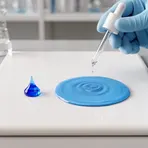
A chemical that makes a liquid spread more easily on a surface
How Effective
- Specialized
10
6.9

- Specialized
3
8.5
- Specialized
- Specialized
1
6.8
70
2.7
Surface Forms
Morphology
Etymology
Surfactant comes from the phrase surface active agent, with surface and active showing it is 'active at the surface' of a liquid. So a surfactant sits on the top layer of a liquid and lowers its surface tension, helping water spread, mix, or wet things more easily.