

superoxide anion
- noun
- /ˌsuːpərˈaɪkaɪd ˈeɪniˌɒn/
- Specialized
 :
anión superóxido
:
anión superóxido
- As shown in Figure 8A, lucigenin-stimulated superoxide anion (O2-) and total oxidative products were computed for all groups.
Examples
-
The formation of the superoxide anion is crucial in many biochemical pathways involving oxidative stress.
-
This enzyme detoxifies the superoxide anion, a free radical formed as a by-product of aerobic metabolism.
Academic text (2000) -
This enzyme detoxifies the superoxide anion, a free radical formed as a by-product of aerobic metabolism.
-
Superoxide anion, hydrogen peroxide, and nitric oxide levels reverted to normal values after the control of hypertension by drugs.
Synonyms
 1
8.2
1
8.2

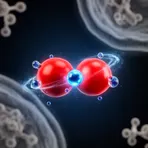
A negatively charged form of oxygen with one extra electron
Surface Forms
Morphology
The meaning is directly compositional: 'superoxide' refers to the oxygen species with an extra electron and 'anion' denotes a negatively charged ion, so together they denote the negatively charged oxygen ion (O2−). Although the phrase is technical, it follows standard scientific naming conventions and a learner who knows both constituents can infer the MWE's meaning.
Etymology
Superoxide anion comes from the parts super, oxide, and anion: it is an oxygen molecule (an oxide) that has picked up one 'extra electron', so it becomes more active and is an 'anion' with a 'negative' charge. That's why the name describes a negatively charged oxygen molecule.