
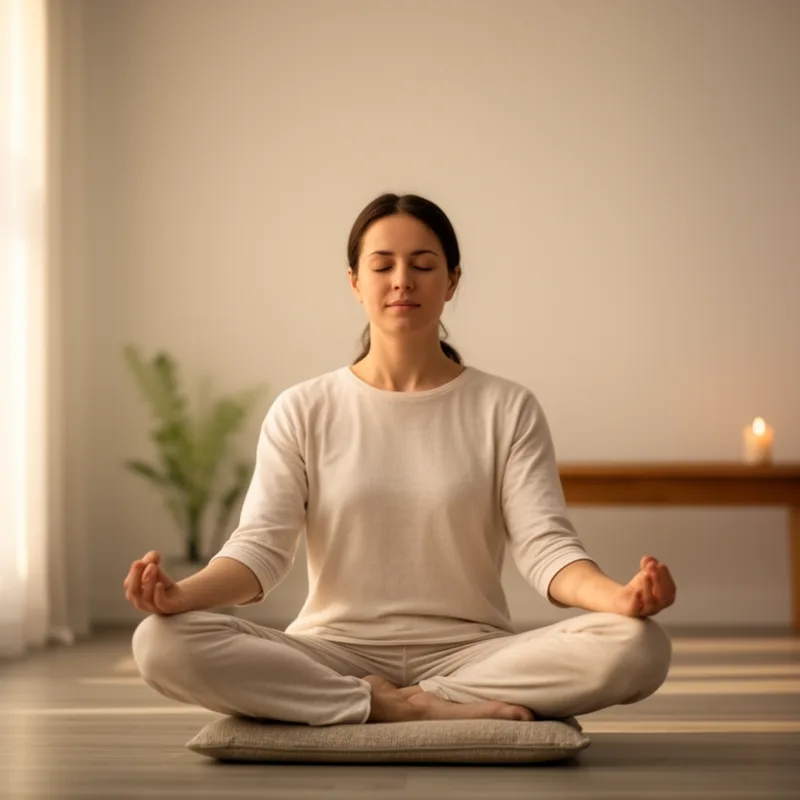
sunyata


 1
9.9
1
9.9
- noun
- /suːˈnjɑːtə/
- Specialized
- In Buddhist meditation, recognizing sunyata helps practitioners experience inner peace and non-attachment.
- realization of sunyata
Loading YouTube…
Watch on YouTubeOr is the Buddha called it spaciousness, Sunyata.
- Or is the Buddha called it spaciousness, Sunyata.
Examples
-
Sunyata is not a nothingness that can be objectified and contrasted with something.
Academic text (1999) -
Implied in Sunyata are the ever-changing nature of the world and the impermanence of things.
Academic text (2017) -
The wisdom of Sunyata tells us that you cannot give to another without giving to yourself.
Fiction book (2001) -
But Sunyata is not merely the static absence of self-nature.
Academic text (1999) -
The term "emptiness" or sunyata is rarely found in early Buddhism.
Academic text (1999) -
By contrast, the insight into Sunyata is a dialectical realization that is both critical and affirmative of phenomenal reality.
Academic text (1999) -
Sunyata is dynamic, "a pure and unceasing function of self-emptying, making self and others manifest in their suchness.
Academic text (1999) -
If Buddhism appears to manifest quietistic tendencies, it is because sunyata is all too easily misunderstood as something static.
Academic text (1999) -
The logic of this dialectical realization of Sunyata gives rise to the distinctly Mahayana notion of the bodhisattva.
Academic text (1999) -
While the Prajna-paramita Sutras introduce this new understanding of sunyata, it is the second-century philosopher, Nagarjuna, who presents the systematic explication of the doctrine.
Academic text (1999)
Synonyms
 14
3.6
14
3.6
A space or place that has nothing in it
 3
9.9
3
9.9
A state in which things do not have their own separate, lasting existence
Antonyms


Surface Forms
Etymology
The word sunyata comes from the Sanskrit root śūnya, often written shunya, which means 'empty'. So in Buddhism sunyata means 'emptiness' and the idea that things do not have a fixed, separate self, and in meditation it is the calm state of not holding on.