
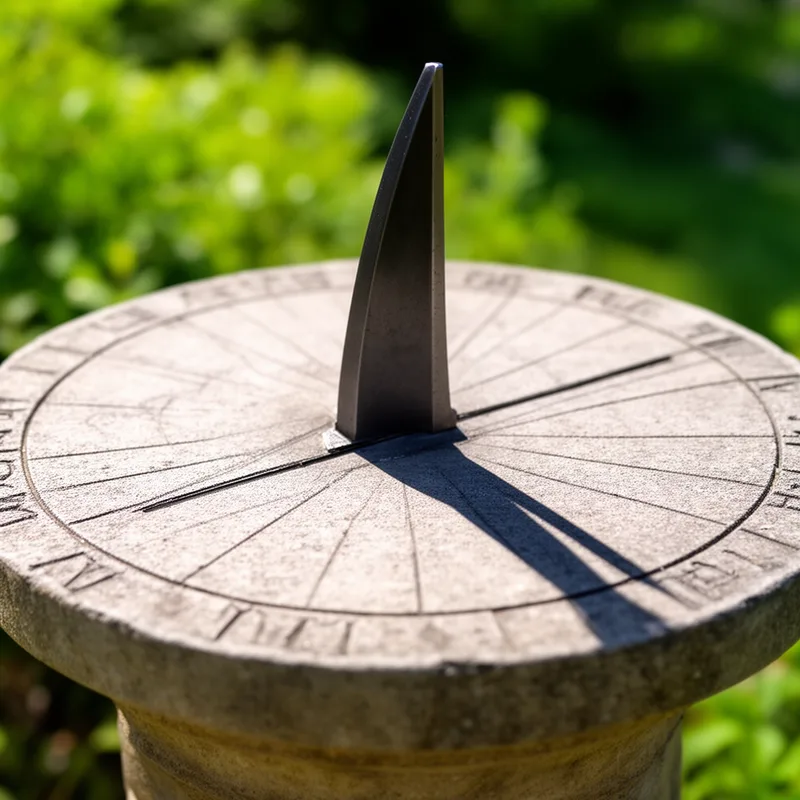
sundial
 11
4.9
11
4.9

- noun
- /ˈsʌnˌdaɪl/
- Unless one lives on the North Pole, a sundial must be tilted.
- an accurate sundial
- construct an accurate sundial
- make a sundial
Examples
-
The Egyptians may have been the first to use sundials (though ancient Chinese devices are a close contender).
Academic text (2004) -
I allowed the students to check on their sundial several times during the day.
Academic text (1994) -
The first clock invented was the sundial. Later, the water clock was developed in China.
Academic text (2012) -
The students were now ready to place their sundials and to tell time with them.
Academic text (1994) -
Remnants of sundials and bronze sculptures reveal the artistic and intellectual side of life in the city.
Academic text (2008) -
The old garden featured a beautiful sundial that indicated the time using shadows.
-
She used the sundial to learn about how time was measured in ancient civilizations.
-
He enjoyed watching the shadow move across the sundial as the sun rose and set.
Compounds

- Specialized
A strong, long-lived flowering plant with blue flowers that grows in eastern and central North America
How Accurate

Surface Forms
Morphology
Etymology
The word sundial is simply sun + dial, and dial is the same word you see on a clock, a 'marked face' for telling time. Picture a stick making a shadow on that face: a sundial is literally a 'sun' dial, a way to read the time from the sun's shadow.