
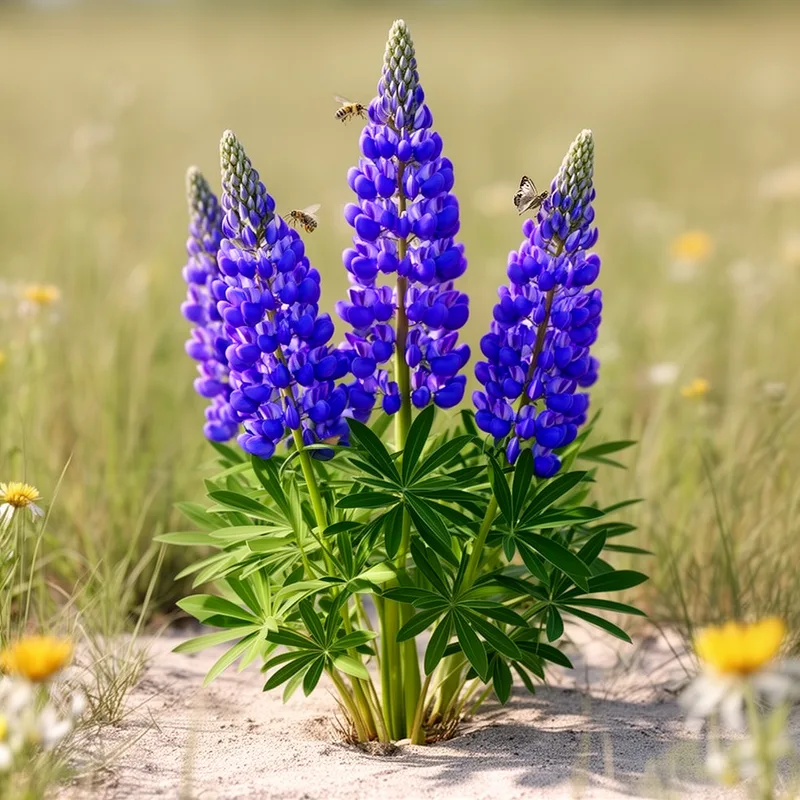
sundial lupine
- noun
- /ˈsʌnˌdaɪl ˈluːpaɪn/
- Specialized
- The sundial lupine flourishes in sandy soils and attracts a variety of pollinators each spring.
Examples
-
Wildlife preserves are working to restore sundial lupine populations for endangered butterflies.
-
I planted several sundial lupines in my garden.
-
Gardeners often plant sundial lupine to bring vibrant blue color to native wildflower beds.
-
The sundial lupine blooms beautifully in spring.
-
Gardeners often plant sundial lupine to bring vibrant blue color to native wildflower beds.
-
The sundial lupine flourishes in sandy soils and attracts a variety of pollinators each spring.
-
Wildlife preserves are working to restore sundial lupine populations for endangered butterflies.
Synonyms
A wild plant with leaves like a hand and bright blue flowers that grows in sandy open soil
A plant that grows in eastern North America with leaves like a hand and groups of blue flowers
A hardy plant that has blue flowers in long groups and leaves shaped like a hand

A strong plant from eastern and central North America that lives many years with palm-like leaves and blue flowers
How Showy
 3
3.7
3
3.7


- Specialized
2
9.3
- Specialized
33
2.2
521
1.0
Surface Forms
Morphology
sundial + lupine
The compound follows a regular noun+noun pattern so a learner who knows 'lupine' will readily infer this is a kind/kind of lupine; however, the modifier 'sundial' does not transparently convey the specific botanical traits (stout perennial, palmate leaves, blue racemes) and could be an idiosyncratic or descriptive label. Therefore the basic class (a type of lupine) is predictable but the precise meaning/details are not, making it only partially transparent to a B1 learner.
Etymology
Sundial lupine may come from the plant's round leaves that seem to turn and point toward the sun like a little sundial, and from lupine, the common name for these blue flowers. So the name helps you remember a 'sun-loving' plant with showy blue flowers.