

wild lupine
- noun
- /waɪld ˈluːpaɪn/
- US
- The wild lupine blooms in brilliant blue clusters every spring in the eastern woodlands.
Examples
-
Conservationists are restoring wild lupine habitats to support the endangered Karner blue butterfly.
-
A patch of wild lupine can add color and attract pollinators to your native garden.
-
The wild lupine blooms beautifully in spring.
-
A patch of wild lupines brightens the meadow.
-
A patch of wild lupine can add color and attract pollinators to your native garden.
-
The wild lupine blooms in brilliant blue clusters every spring in the eastern woodlands.
-
Conservationists are restoring wild lupine habitats to support the endangered Karner blue butterfly.
Synonyms
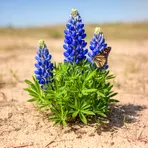
A wild plant with leaves like a hand and bright blue flowers that grows in sandy open soil

A strong, long-lived flowering plant with blue flowers that grows in eastern and central North America
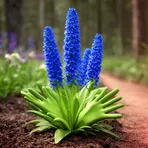
A hardy plant that has blue flowers in long groups and leaves shaped like a hand

A strong plant from eastern and central North America that lives many years with palm-like leaves and blue flowers
Surface Forms
Morphology
The meaning is directly derivable from combining 'wild' (living naturally, not domesticated) with 'lupine' (a type of plant): it denotes a lupine that grows in the wild. This adjectival composition is a regular, cross-linguistic pattern, so a B1 learner who knows both words would readily understand the phrase.
Etymology
Wild lupine gets its name from a simple image: lupine may come from the Latin word 'lupus' meaning 'wolf' because people long ago thought the plant 'ate' or used up the soil, and wild means it grows in nature. That picture of a 'wolf' eating the ground makes the name easy to remember and fits the blue wildflower you find in open, rough places.

