

sugar cane
 12
2.0
12
2.0

- noun
- /ˈsuːɡər keɪn/
- US
- In the tropical climate, fields of sugar cane thrive and provide essential ingredients for many products.
- sugar cane plantation
- sugar cane industry
- sugar cane fields
Loading YouTube…
Watch on YouTubeYou you mentioned that you were looking at first generation biofuels and specifically sugar cane.
- You you mentioned that you were looking at first generation biofuels and specifically sugar cane.
- And the sugar plantations recognize it's really easy to grow sugar cane and grow other raw sources of of glucose, molasses, etcetera, etcetera.
- I'm, you know, I got soybean, sugar cane hanging off the back of my headpiece.
- It says golden honey crisp, apple blossom and fresh sugar cane.
- And then he eating sugar cane.
- It's not like that artificial sugar made of sugar beets and sugar cane.
- He stalks through the sugar cane fields looking for prey, tearing victims apart, drinking their blood and turning them into unworldly beasts as well.
Examples
-
Traditionally, San Pedro's economy has revolved around its sugar cane industry.
Academic text (1994) -
Brazil is the largest producer of sugar cane, coffee, and beef.
Academic text (2010) -
You gotta use real sugar cane.
-
It's made of sugar cane.
-
You have a good job cutting sugar cane.
-
A bunch of old-money families that made their fortune off of sugar cane back in the day.
-
Temperature of mid-80s, humidity just perfect, and the air smells of sweet sugar cane.
-
In 1869, he and his family moved to Sapelo to raise cotton, sugar cane, and other crops.
Academic text (2010) -
Heavy rains flooded Bauta, burying the sugar cane and cocoa plants in a pool of muddy water.
Fiction book (1999) -
The farmer grows sugar cane to extract its sweet juice for making sugar.
Synonyms
 11
1.3
11
1.3
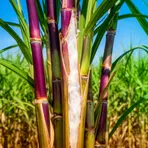
A tall tropical grass with thick, sweet stems people grow to make sugar

A tall grass with thick stems whose juice is used to make sugar
How Tall

Surface Forms
Morphology
The compound is compositionally transparent: combining 'sugar' (sweet substance) with 'cane' (a stalk-like plant stem) naturally yields a plant/stalk associated with sugar, i.e., the tall tropical plant grown for its sweet stalks. This is a straightforward, cross-linguistically common naming pattern, so a B1 learner who knows the constituents will readily infer the MWE meaning.
Etymology
Sugar cane is a compound name for a tall plant whose long, hard cane stalks are full of sweet sugar juice. People press the stalks to get that 'sugar' juice, so the name means 'a plant grown for sugar'.