
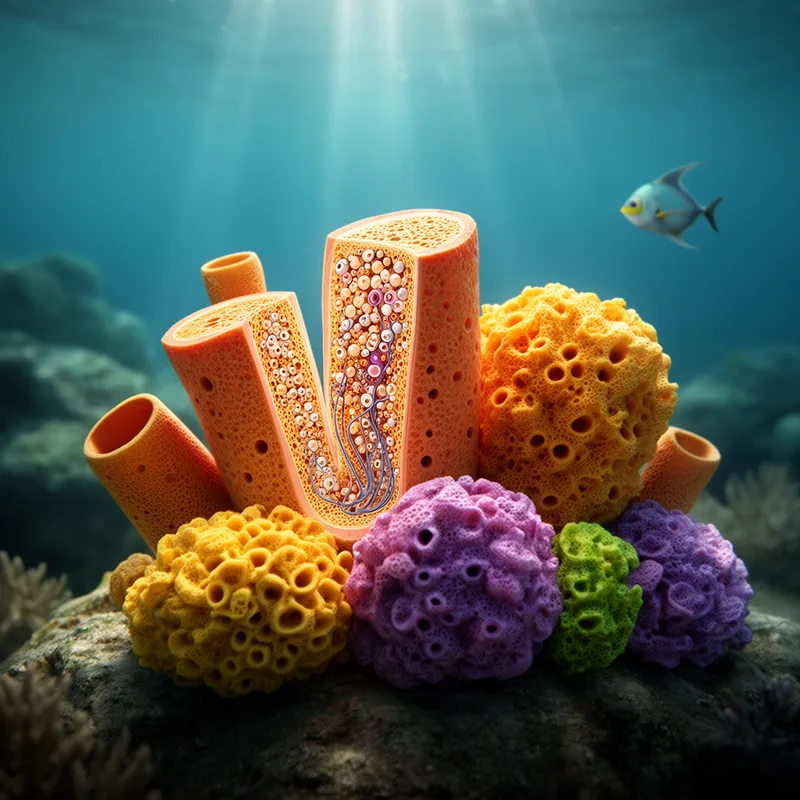
subkingdom Parazoa
- noun
- /sʌbˈkɪŋdəm pəˈræzoʊə/
- Specialized
- The subkingdom Parazoa includes sponges that lack true tissues.
Examples
-
Did you know that organisms in the subkingdom Parazoa are primarily marine?
-
Zoologists often compare the cellular organization of subkingdom Parazoa with that of more complex animals.
-
Sponges are classified within the subkingdom Parazoa due to their simple cellular structure.
-
The subkingdom Parazoa includes organisms that lack true tissues unlike animals in the Metazoa.
-
Sponges are classified within the subkingdom Parazoa due to their simple cellular structure.
-
The subkingdom Parazoa includes organisms that lack true tissues, distinguishing them from Metazoa.
-
Zoologists often compare the characteristics of the subkingdom Parazoa with those of other animal groups.
Synonyms

Animals made of many cells, including sponges, that lack true tissues and organs
Surface Forms
Morphology
The term is directly compositional: 'subkingdom' names the taxonomic rank and 'Parazoa' is the taxon label, so the phrase simply denotes the taxon Parazoa at the subkingdom rank (i.e., the group of simple multicellular organisms/sponges). Although technical, this follows standard, cross-linguistic taxonomic naming conventions, so a learner who knows both constituents can infer the meaning.
Etymology
Subkingdom Parazoa comes from the word parts para meaning 'beside' and zoa meaning 'animals', giving the picture of life that sits beside true animals. It now names a small group of very simple animals, like sponges, that have less specialized cells and do not form 'true tissues'.

