
Parazoa
- noun
- /ˌpærəˈzoʊə/
- Specialized
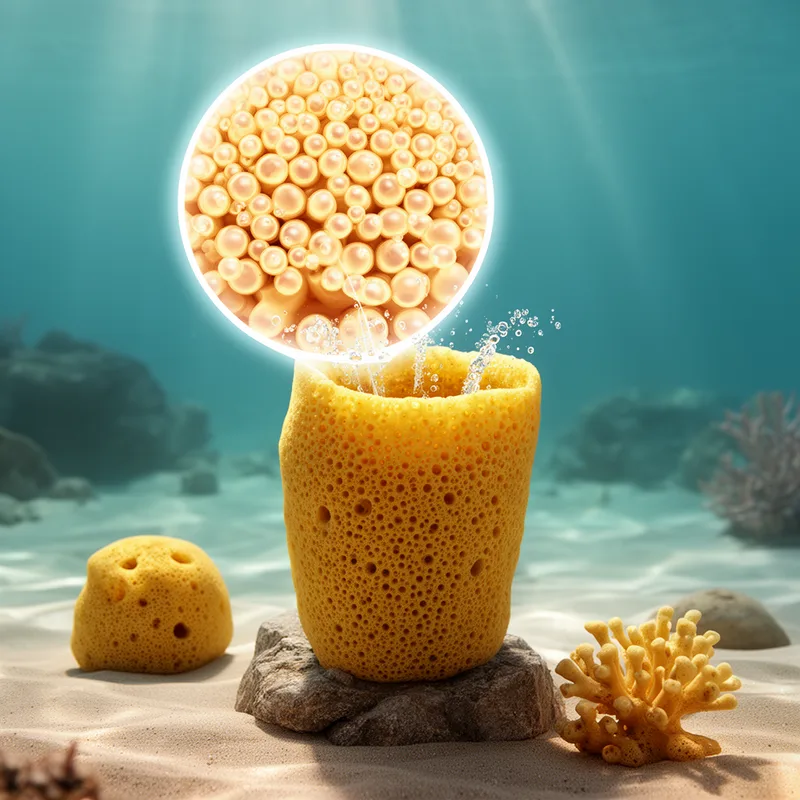
- The Parazoa represent the simplest multicellular animals, lacking true tissues and organs.
Examples
-
Sponges are classified in the phylum Porifera, which is the only group within the Parazoa.
-
Researchers study Parazoa to understand early evolutionary developments in animal life.
-
The classification of Parazoa includes only the phylum Porifera.
-
Many scientists study Parazoa to understand early animal evolution.
-
Sponges, which belong to the Parazoa, are known for their simple body structure and lack of true tissues.
-
The Parazoa are distinguished from other animal groups by their less-specialized cells.
-
Understanding Parazoa is crucial for researchers studying the origins of multicellular life.
Synonyms

A group of simple animals like sponges that do not have true tissues
Compounds
- Specialized
A group of simple animals like sponges that do not have true tissues
Surface Forms
Etymology
Parazoa comes from Greek parts para- meaning 'beside' and -zoa meaning 'animals', the same root you see in zoo. So Parazoa names animals that sit 'beside' the more complex animals — simple creatures like sponges that do not have true tissues.

