
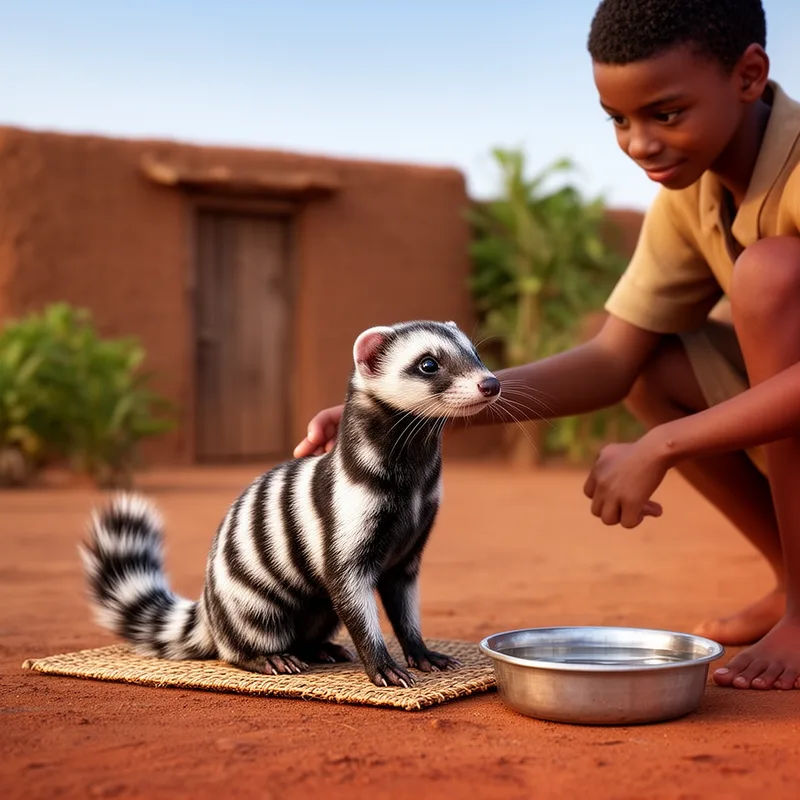
striped muishond
- noun
- South African
- A striped muishond has striking black and white fur and a bushy tail.
Examples
-
The striped muishond is often kept as a pet in some rural African communities.
-
Farmers sometimes encounter a striped muishond near their fields at night.
-
The striped muishond is a fascinating creature.
-
Have you ever seen a striped muishond in the wild?
-
A striped muishond has striking black and white fur and a bushy tail.
-
Farmers sometimes encounter a striped muishond near their fields at night.
-
The striped muishond is often kept as a pet in some rural African communities.
Synonyms
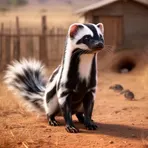
A small African mammal like a ferret with bold black and white stripes
A small African animal that eats meat and has black and white stripes
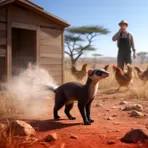
A small animal like a weasel from southern Africa that makes a strong smell
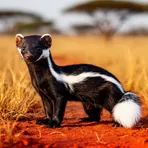
A small African animal in the weasel family with black and white stripes
Surface Forms
Morphology
This is a simple adjective + noun combination where 'striped' modifies 'muishond', so the meaning 'a muishond with stripes' is directly and compositionally derivable from the constituents. Although 'muishond' is a specific animal name, the pattern follows normal adjective-noun composition common across languages, so a B1 learner who knows both words would understand the phrase.
Etymology
Striped muishond may come from the Afrikaans words muis ('mouse') and hond ('dog') because people thought it was small like a mouse but had a dog-like bite. Its strong black-and-white stripes give a clear picture, so the name helps you remember it is the small, striped carnivore called the 'striped polecat'.

