

Ictonyx striata
- noun
- Specialized
- The Ictonyx striata is easily recognized by its bold black and white stripes.
Examples
-
Unlike skunks, the Ictonyx striata uses a powerful odor primarily for defense against predators.
-
Farmers sometimes keep Ictonyx striata to help control rodent populations.
-
The Ictonyx striata is often found in grasslands.
-
Ictonyx striata can be seen in various African regions.
-
Farmers sometimes keep Ictonyx striata to help control rodent populations.
-
The Ictonyx striata is easily recognized by its bold black and white stripes.
-
Unlike skunks, the Ictonyx striata uses a powerful odor primarily for defense against predators.
Synonyms
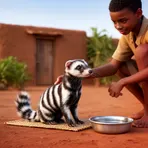
A small ferret-like African animal with black-and-white fur that people sometimes keep as a pet
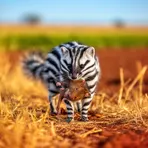
A small African animal that eats meat and has black and white stripes
Surface Forms
Morphology
Ictonyx + striata
This is a scientific Latin binomial (a genus + species) rather than a normal compositional English phrase; B1 learners who know ordinary English words would not routinely know Latin species-formation rules or recognize 'Ictonyx' as a genus. Although 'striata' resembles English 'striated/striped', taxonomic names and proper nouns are not transparently interpretable by average learners, so the overall meaning ('striped polecat') cannot be reliably derived from the parts.
Etymology
Ictonyx striata comes from older words that name a weasel-like animal and mean 'striped'. The part striata means 'striped', so the full name gives a clear picture of the animal's bold black-and-white stripes and helps you remember it is the striped polecat.

