

to striate
 2
9.5
2
9.5

- verb
- /ˈstraɪ.eɪt/
- Specialized
- The geologist noted how the sedimentary layers were striated over millions of years, revealing the earth's history.
- striated muscles
Examples
-
Rows of striated marble seats climbed the chamber in concentric circles.
Fiction book (1994) -
A decade later, two more map stamps were released with the disputed Guyanese territory depicted with striated lines.
Academic text (1992) -
The curtain at Assisi is also red, as is the gold-striated robe worn by Jacob as he steps out the door.
Academic text (2006) -
His huge turtle-like biceps, striated with bluish, thready veins, shook under his menacing shoulders.
Fiction book (1991) -
The artist decided to striated the ceramic vase with fine lines for a decorative effect.
-
To enhance the texture, the designer striated the fabric with subtle grooves that caught the light beautifully.
Synonyms
 377
2.1
377
2.1
To form a row along the edge of something
 59
3.2
59
3.2
To mark a surface with long narrow lines of a different color
 22
2.8
22
2.8
To mark something with long thin lines of a different color
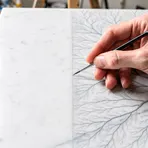 5
7.7
5
7.7
To make thin lines appear on something
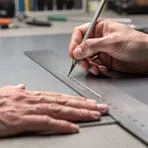 3
7.4
3
7.4
To mark a surface with a sharp point or write something carefully by hand
Compounds

- Specialized
Part of the back of the brain that gets signals from the eyes for vision
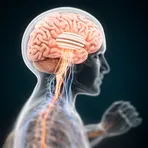
- Specialized
Part of the brain made of white and grey matter that helps control movement

- Specialized
The part of the brain at the back that receives visual signals from the eyes
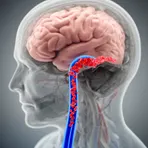
- Specialized
A small vein in the brain that carries blood away from a deep part into a larger vein
How Grooved

Surface Forms
Morphology
Etymology
Striate comes from the Latin stria, meaning 'groove' or 'line'. Think of making a surface like a stripe by adding thin lines or grooves, so to striate something is to mark it with thin, parallel lines.