

strabismus
 1
9.8
1
9.8

- noun
- /strəˈbɪzməs/
- Specialized
- Ophthalmologic examination demonstrated that all three children had strabismus, primary telecanthus, and bilateral coloboma iridis (figure).
- strabismus, primary telecanthus
- primary strabismus
Loading YouTube…
Watch on YouTubeBut probably not in children that have strabismus where one eye turns in too much.
- But probably not in children that have strabismus where one eye turns in too much.
- It'd be very unusual for that to trigger this kind of either strabismus, misalignment of the eyes, let alone amblyopia.
- Now I was born with strabismus, which is more commonly referred to in like as like a slang term lazy eye.
- Now, one of the arguments I would have with the Doctor Bates if he was here today would be that, hey, what about strabismus surgery?
Examples
-
The doctor explained that strabismus, often referred to as crossed eyes, can be treated with glasses or surgery.
-
On examination, all 3 were found to have strabismus, primary telecanthus, bilateral coloboma iridis, and low-set ears with posterior rotation of the pinnae.
Academic text (2004) -
But probably not in children that have strabismus where one eye turns in too much.
-
It also appears he has strabismus, which probably means he does not do well in school.
Blog text (2) -
Among the students with optic atrophy, 2 had associated strabismus.
Academic text (2008) -
One of the twins presents with strabismus, primary telecanthus, and bilateral coloboma iridis.
Academic text (2004) -
Cruz reported good results with mitomycin C in preventing postoperative adhesions in strabismus.
Academic text (2005) -
If a child has strabismus, their eyes may point in different directions, causing vision problems.
-
Parents should be aware that strabismus can affect a child's depth perception and coordination.
Synonyms
 2
6.8
2
6.8
A condition in which the eyes do not point in the same direction
 1
5.8
1
5.8
One or both eyes turn inward toward the nose
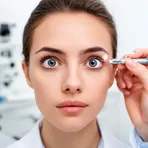

 1
9.9
1
9.9
One or both eyes point outward instead of looking straight

One or both eyes turn outward away from the nose
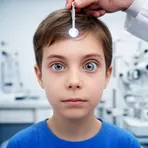
One or both eyes turn outward so they point away from the nose

A condition where one or both eyes turn inward toward the nose
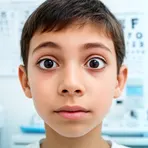
One or both eyes turn inward toward the nose
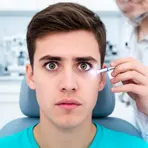
A condition where one or both eyes turn in toward the nose
Compounds
- Specialized
A condition where one or both eyes turn inward toward the nose
How Misaligned
- Specialized
1
9.8
 41
3.9
41
3.9
Surface Forms
Etymology
The word strabismus comes from the Greek word strabismos, from the root strab- meaning 'to look sideways' or 'squint'. So, strabismus is the medical name for when one or both eyes are not lined up and point in different directions.