

walleye


 1
9.9
1
9.9
- noun
- /ˈwɔːl.aɪ/
- Specialized
 :
estrabismo divergente
:
estrabismo divergente
- For a walleye suffering from strabismus, both eyes can be pointed outward, impacting its ability to hunt.
Examples
-
For example, students might conclude that if a lake held both walleye pike and northern pike, the elimination of one species would be inconsequential because a predator would simply fill in for the eliminated species.
Academic text (1994) -
Anthropologist Larry Nesper provides a rich study of how the struggle to practice treaty rights shaped Ojibwe identity, particularly in the twentieth century, in The Walleye War: The Struggle for Ojibwe Spearfishing and Treaty Rights.
Academic text (2009) -
A walleye often exhibits a condition called strabismus, where its eyes are directed outward.
-
When a fish has strabismus, like a walleye, one eye may look straight ahead while the other looks off to the side.
Synonyms
 1
9.8
1
9.8
A problem in which one or both eyes do not point the same way

One or both eyes turn outward so they point away from the nose

One or both eyes turn outward away from the nose
Antonyms

- Specialized
A condition where one or both eyes turn inward toward the nose
Compounds
- Specialized
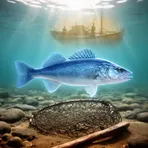
A walleye fish with blue colour that once lived in the Great Lakes and is now extinct
How Divergent
- Specialized
1
9.9

- Specialized
1
9.8
Surface Forms
Morphology
Etymology
Walleye for an eye that turns outward comes from a simple picture of wall + eye. Think of one eye looking at a 'wall' instead of forward, which helps you remember that a walleye points 'outward'.