

steam whistle


 1
4.6
1
4.6
- noun
- /stiːm ˈwɪsəl/
- As the tour guide spoke, the nostalgic steam whistle echoed in the background, reminding visitors of the steam era.
- steam whistle sounded
- steam whistle on a ship
Examples
-
The conductor of the train blew the engine's steam whistle for the last mile of the return journey, beckoning citizens to the S&S depot for a jubilant celebration on the evening of the school's first day.
Academic text (2007) -
The machinery groans back into action, and the people return to their jobs just as a steam whistle screeches.
Fiction book (1994) -
With his other hand, he hauled on the steam whistle.
Fiction book (1999) -
The Deathcoaster's steam whistle screams to announce its birth.
Fiction book (1992) -
She feared that one cold morning the steam whistle would sound, and suddenly she would be alone in this vast, godless country.
Fiction book (2002) -
Just then the steam whistle sounded, and Niklas folded the newspaper carefully and placed it inside his shirt, then started toward the mine shaft's massive oak bracing.
Fiction book (2002) -
The steam whistle battered their ears in a long wail: two longs, a short, and a long—the warning for a public crossing.
Fiction book (1999) -
The rain seems to muffle every sound but its own; the foghorn, buoys, and steam-whistles of ships sound farther away than on clear days when, from the lantern gallery, he can perceive ships at a great distance.
Fiction book (1999) -
The sound of the steam whistle startled the passengers as it announced the train's arrival.
-
Every morning, the factory's steam whistle signaled the start of the workday, guiding workers to their stations.
Synonyms
 56
1.0
56
1.0
A high loud sound made by a person, a device, or fast moving air
 1
3.9
1
3.9
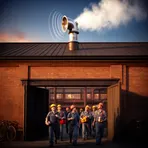
A loud sound at a factory that signals the start or end of work
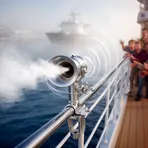
A loud device on a boat that makes a signal sound to warn other ships
How Loud

Surface Forms
Morphology
The meaning 'a whistle that produces sound using steam' is directly and transparently derived from combining 'steam' (vapor) with 'whistle' (a sound-making device). This straightforward noun–noun compound follows regular English compounding patterns and is cross-linguistically common, so a B1 learner who knows both constituents would readily infer the MWE's meaning.
Etymology
Steam whistle comes from early steam engines where hot steam pushed through a metal whistle to make a very loud sound. People on trains and in factories used that sound to 'signal' times or to 'warn' others, so it means a loud whistle made by steam that is used as a 'signal'.