
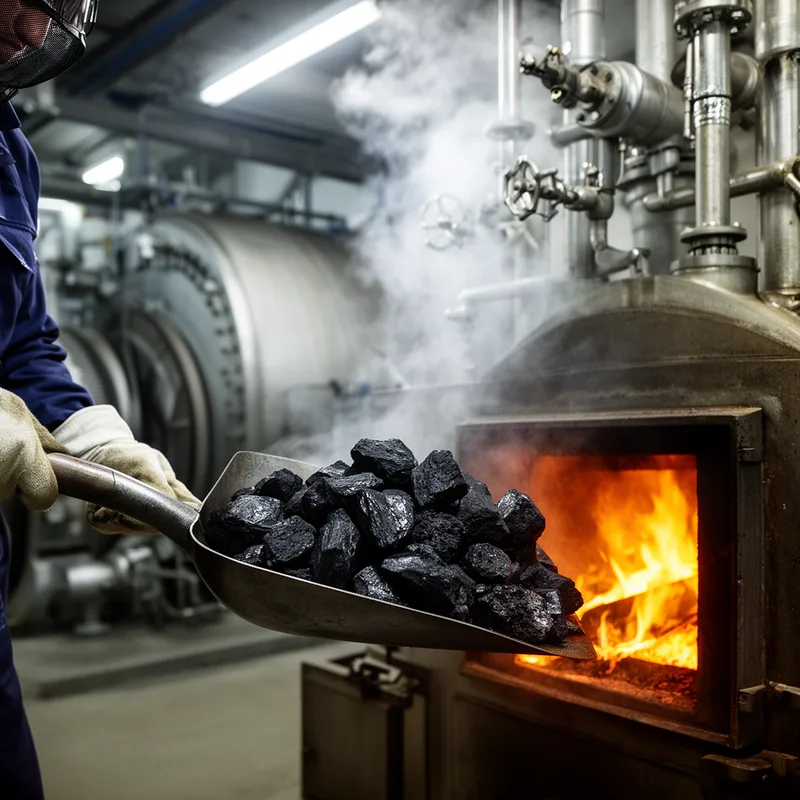
steam coal
- noun
- /stiːm koʊl/
- Archaic
 :
carbón de vapor
:
carbón de vapor
- Many power plants rely on steam coal to operate their steam boilers efficiently.
Examples
-
Historically, steam coal fueled locomotives throughout the heyday of rail travel.
-
The price of steam coal has fluctuated with changes in global energy demand.
-
The factory uses steam coal to power its machines.
-
Many industries rely on steam coal for energy.
-
Many power plants rely on steam coal to generate power by heating water in their boilers.
-
Historically, steam coal fueled locomotives during the golden age of rail travel.
-
The industrial plant uses steam coal to produce steam for its machinery.
Synonyms

 1
8.7
1
8.7

A soft brown coal used for fuel that gives less heat than harder coal


 1
6.6
1
6.6
A soft black coal that burns easily and makes a smoky yellow flame
 1
5.8
1
5.8
A soft brown material people burn to make heat or electricity
A dark fuel that burns easily and makes a lot of smoke

A hard natural fuel that burns slowly and gives very strong heat

A hard, shiny coal that burns slowly and makes a lot of heat with little smoke

A soft brown coal that gives less energy when burned
Surface Forms
Morphology
The meaning 'coal suitable for burning in steam boilers' is directly and compositionally derived from 'steam' (vapor used to drive boilers) + 'coal' (fossil fuel): the first noun specifies the type or use of the second. This noun-noun modifier pattern is common and cross-linguistically transparent, so a B1 learner who knows both constituents would readily infer the intended meaning.
Etymology
Steam coal comes from the simple image of coal burned to make steam in 'steam boilers' for trains and factories. That's why steam coal means coal chosen for making 'steam power'.