
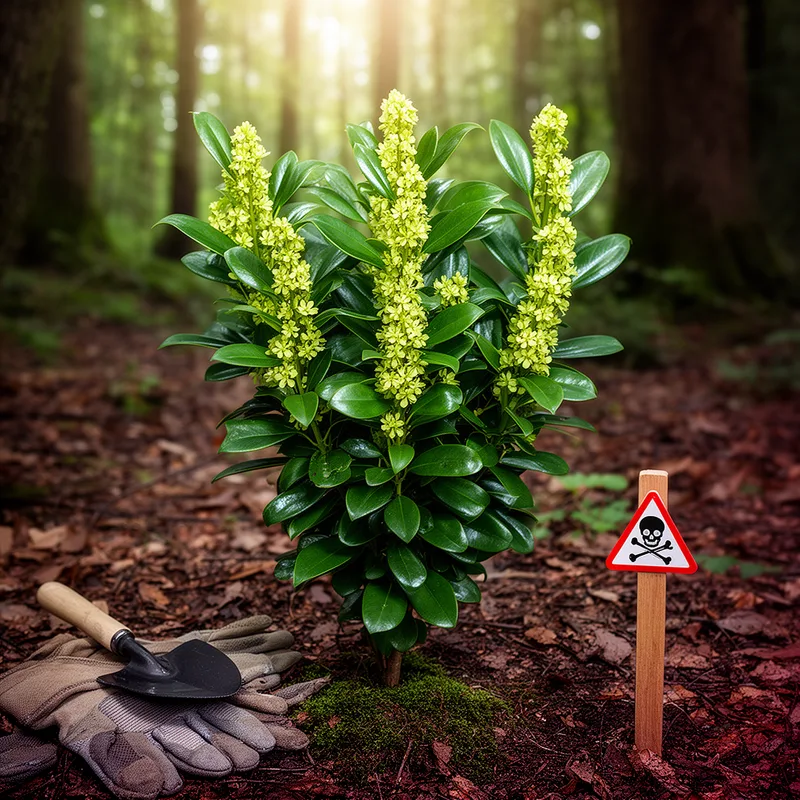
spurge laurel
- noun
- Specialized
- The woodland was thick with spurge laurel, its glossy leaves gleaming in the shade.
Examples
-
She planted a spurge laurel in her garden to add some evergreen color year-round.
-
Due to its toxicity, spurge laurel should be handled with care, especially around pets.
-
The spurge laurel thrives in shaded areas.
-
Many gardeners appreciate the spurge laurel for its glossy leaves.
-
The woodland was thick with spurge laurel, its glossy leaves gleaming in the shade.
-
She planted a spurge laurel in her garden to add some evergreen color year-round.
-
Due to its toxicity, spurge laurel should be handled with care, especially around pets.
Synonyms

A bush with shiny thick leaves and small yellow-green flowers often found in woods

A bush with shiny leaves and yellow-green flowers in spring
Surface Forms
Morphology
The compound simply combines two plant nouns so a learner who knows 'spurge' (a type of plant) and 'laurel' (an evergreen plant) can infer it names a spurge that is laurel-like — i.e. a shrub with glossy evergreen leaves. Plant-name compounds follow a transparent, compositional pattern cross-linguistically, so the specific shrub meaning is derivable from its constituents.
Etymology
Spurge laurel may come from two simple ideas: spurge for plants that have a milky sap that can make you sick, and laurel because its shiny leaves look like laurel leaves. So the name gives a picture of a bush that looks like a laurel but is 'poisonous', which is why people say to handle spurge laurel with care.

