
spotted salamander


 1
6.4
1
6.4
- noun
- /ˈspɑːtɪd ˈsæləmændər/
- US
- Most of its close relatives (mole, tiger, and spotted salamanders) mate later, when the bays have filled with water, but marbled salamanders do their mating at the dry pond sites.
- study of spotted salamanders
Examples
-
Lethal temperatures were documented previously in a study of spotted salamanders in New York (Pough et al. 1987).
Academic text (2009) -
Species used for experimental studies included the spotted salamander, American toad (Bufo americanus), gray treefrog (Hyla versicolor), and wood frog.
Academic text (2009) -
and found that the embryos of the spotted salamander (Ambystoma maculatum) incorporate an algae (Oophila amblystomatis).
Blog text (17) -
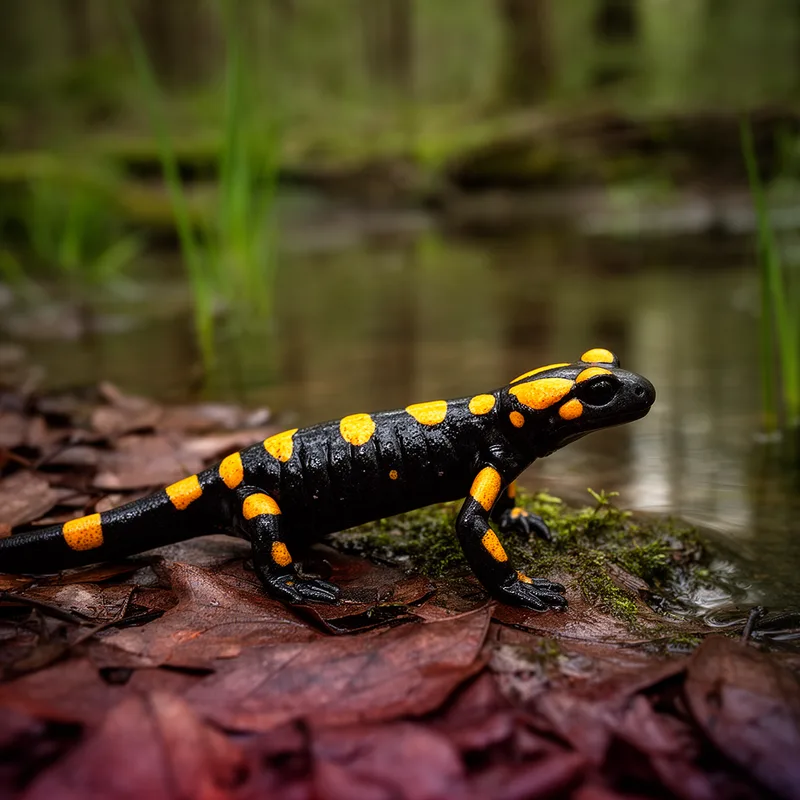
The spotted salamander has distinctive yellow spots that make it easily recognizable in its natural habitat.
-
During spring, you can often find the spotted salamander near ponds as they come out to breed.
-
The conservationist explained how the spotted salamander plays a vital role in maintaining the ecosystem in North America.
Synonyms

A black salamander with yellow spots that lives in North American woods
Surface Forms
Morphology
The meaning is directly compositional: 'spotted' (having spots) modifies 'salamander' (a type of amphibian), yielding 'a salamander with spots', which matches the provided definition. This adjectival-noun pattern is cross-linguistically common and should be immediately clear to a B1 learner who knows both constituent words.
Etymology
Spotted salamander simply describes the animal: a salamander with bright spots on dark skin, often found in North America. The clear image of a small, dark amphibian covered in yellow or orange spots helps you remember this 'species' and why it has that name.