
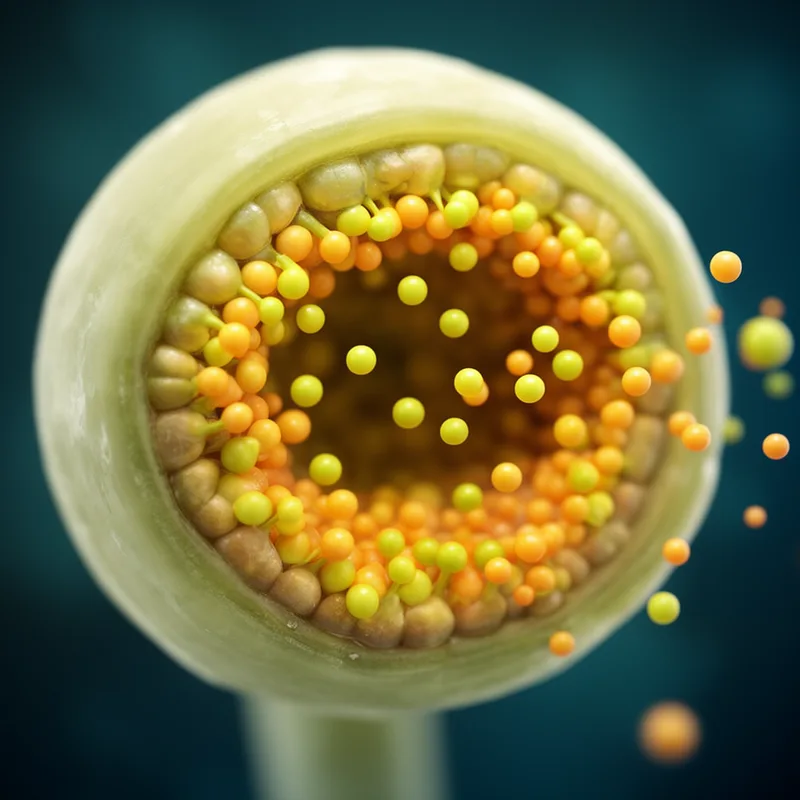
sporogenous
9.9
Producing spores that plants or fungi use to reproduce
- adjective
- /spɔːrˈɒdʒənəs/
- Specialized
:
esporogénico
- Certain sporogenous cells develop into spores in the reproductive cycle of fungi.
Examples
-
Researchers studied the sporogenous tissue to understand how spores are produced.
-
The sporogenous layer is essential for spore formation in flowering plants.
-
The sporogenous layer is crucial.
-
Many ferns are sporogenous.
-
Certain sporogenous cells develop into spores during the reproductive cycle of fungi.
-
Researchers investigated the sporogenous tissue to learn more about spore production techniques.
-
In flowering plants, the sporogenous layer plays a crucial role in the formation of spores.
Synonyms


 1
7.2
1
7.2
Having parts that make tiny cells to reproduce instead of seeds
is for cells or tissues that make spores rather than whole organisms
Surface Forms
sporogenous positive
Morphology
Etymology
Sporogenous combines spore and the ending -genous, which means 'producing', just like in generate. So, sporogenous describes cells or plant parts that are 'producing spores'.