
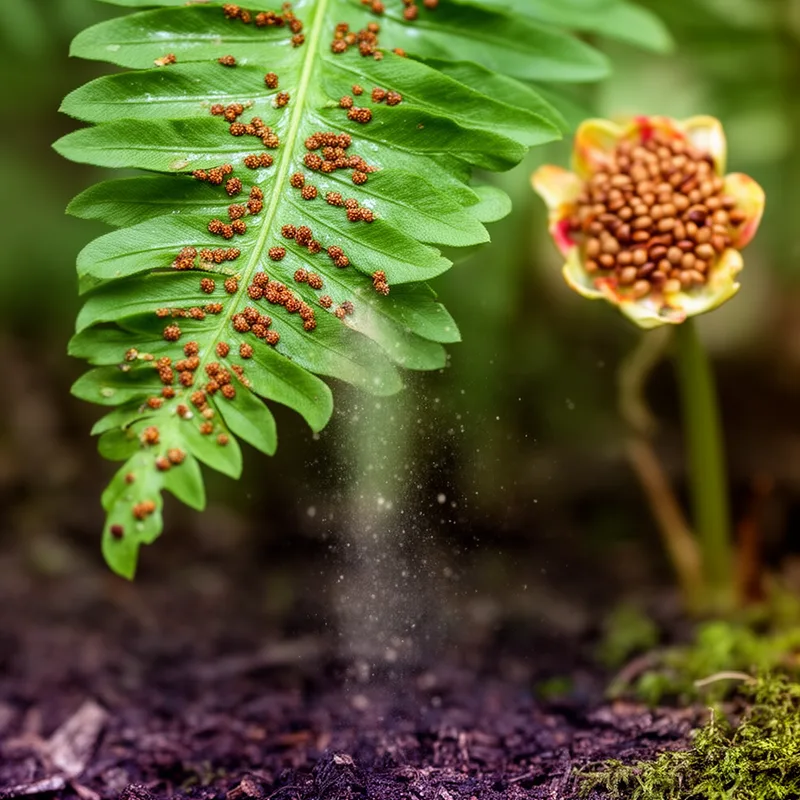
spore-bearing


 1
7.2
1
7.2
Having parts that make tiny cells to reproduce instead of seeds
- adjective
- /ˈspɔrˌbɛrɪŋ/
- Specialized
:
portador de esporas
- Underside of spore-bearing leaflets of the Old World climbing fern. Some leaflets produce spores; others don't.
- spore-bearing plants
- spore-bearing leaflets
Examples
-
The scouring rush, a spore-bearing plant with jointed, leafless stems, is also common.
-
Entomologist Robert Pemberton examines a spore-bearing leaflet of the Old World climbing fern.
Academic text (2000) -
Spore-bearing plants in this habitat include two kinds of spore-bearing clubmosses and interrupted fern.
-
A mushroom is the fleshy, aboveground, spore-bearing part of a fungus, which grows mostly underground.
Synonyms

9.9
Producing spores that plants or fungi use to reproduce
applies to whole plants, fungi, or microorganisms that have spores instead of seeds
Surface Forms
spore-bearing positive
Morphology
Etymology
Spore-bearing comes from spore, a word for a very small 'seed', and bearing, meaning 'carrying'. So a spore-bearing plant or fungus carries or makes those tiny seed-like parts instead of seeds.