
splenic fever
- noun
- /ˈsplɛnɪk ˈfiːvər/
- Archaic
 :
fiebre esplénica
:
fiebre esplénica
- Humans can contract splenic fever through direct contact with infected animals.
Examples
-
Farmers are advised to vaccinate livestock against splenic fever to prevent outbreaks.
-
The sudden death of several cattle was later attributed to splenic fever.
-
Farmers in rural areas should be aware of splenic fever.
-
The outbreak of splenic fever affected many livestock owners last year.
-
Farmers are advised to vaccinate livestock against splenic fever to prevent outbreaks.
-
Humans can contract splenic fever through direct contact with infected animals.
-
The sudden death of several cattle was later attributed to splenic fever.
Synonyms

 80
6.9
80
6.9

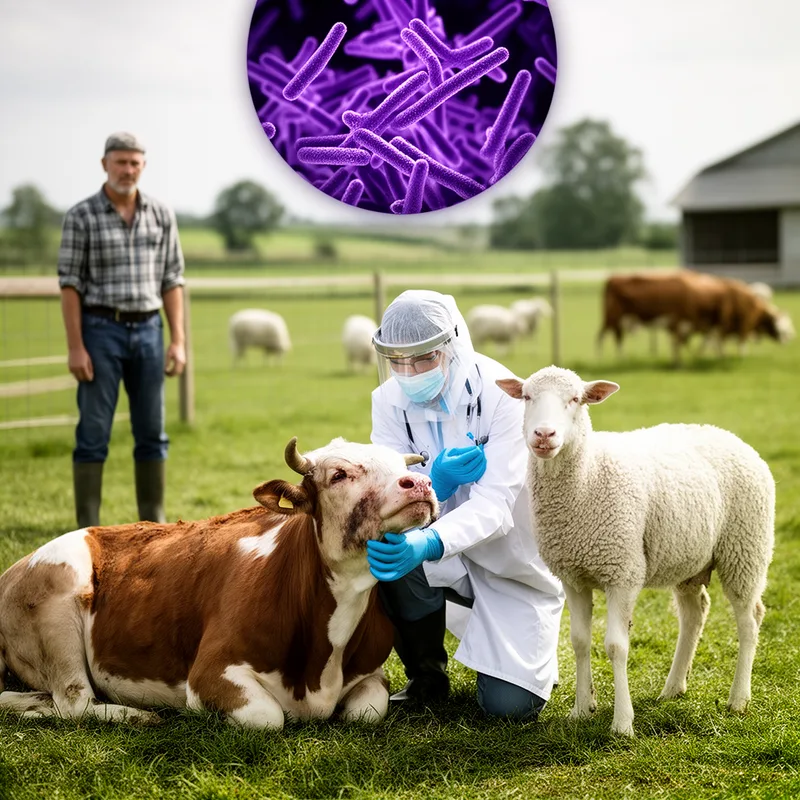
A serious disease that mainly affects animals like cows and sheep and can also infect people
Surface Forms
Morphology
The literal parts 'splenic' (relating to the spleen) and 'fever' (high temperature) would lead a learner to expect a general fever involving the spleen, but the established meaning refers specifically to the disease anthrax (a particular zoonotic, highly infectious condition). Because the MWE denotes a specialized, historically used disease name rather than a predictable composition of its parts, a B1 learner who knows the constituents would not reliably infer this meaning.
Etymology
The name splenic fever comes from farmers and doctors who saw that animals that died often had a very large spleen. The word splenic points to the 'spleen' and fever means illness, so the name came to mean the serious disease now called 'anthrax'.