
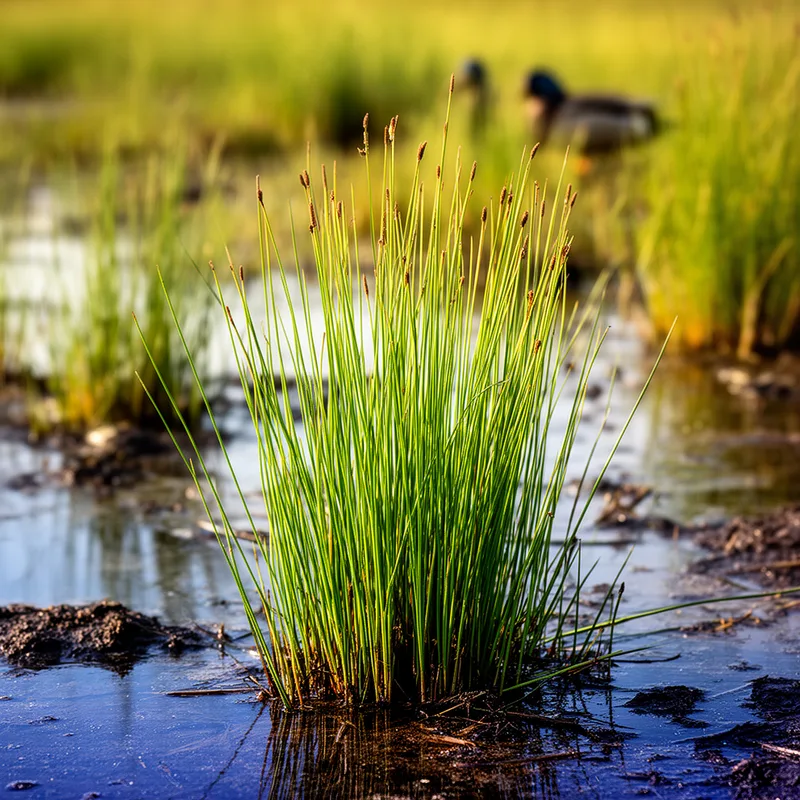
spike rush
- noun
- /spaɪk rʌʃ/
- Specialized
- Many spike rushes thrive in wetlands.
Examples
-
The wetland was filled with tall spike rush swaying in the breeze.
-
The spike rush grows abundantly in marshy areas.
-
Conservationists are working to protect habitats where spike rush thrives.
-
Many species of waterfowl nest among the spike rush growing along the marsh edge.
-
In the wetlands, you can find many species of spike rush growing among other aquatic plants.
-
The ecological study focused on how spike rush interacts with nearby vegetation in marshy areas.
-
During our hike, we observed a diverse habitat that included large patches of spike rush near the water's edge.
Synonyms
A group of grass-like plants that grow in wet places with dense flower spikes

A small water plant with thin grass-like leaves used in fish tanks
A water plant with thin leaves used in aquariums to add oxygen

A water plant with thin leaves that adds oxygen to aquarium water

A water plant with thin leaves kept in aquariums to give oxygen to the water
A grass-like wetland plant with thin round stems that spreads along the ground
How Tall


Surface Forms
Morphology
The compound is a straightforward noun‑noun description: 'spike' (a spike-like flower stalk) combined with 'rush' (a marsh plant) yields a type of rush with a spike-like inflorescence. This is a regular, compositional botanical naming pattern that a B1 learner who knows both constituent senses can infer.
Etymology
Spike rush comes from how the plant looks: each thin stem ends in a pointy flower like a spike, and it grows in wet groups like other rush plants, so the name tells you its shape and where it lives.