
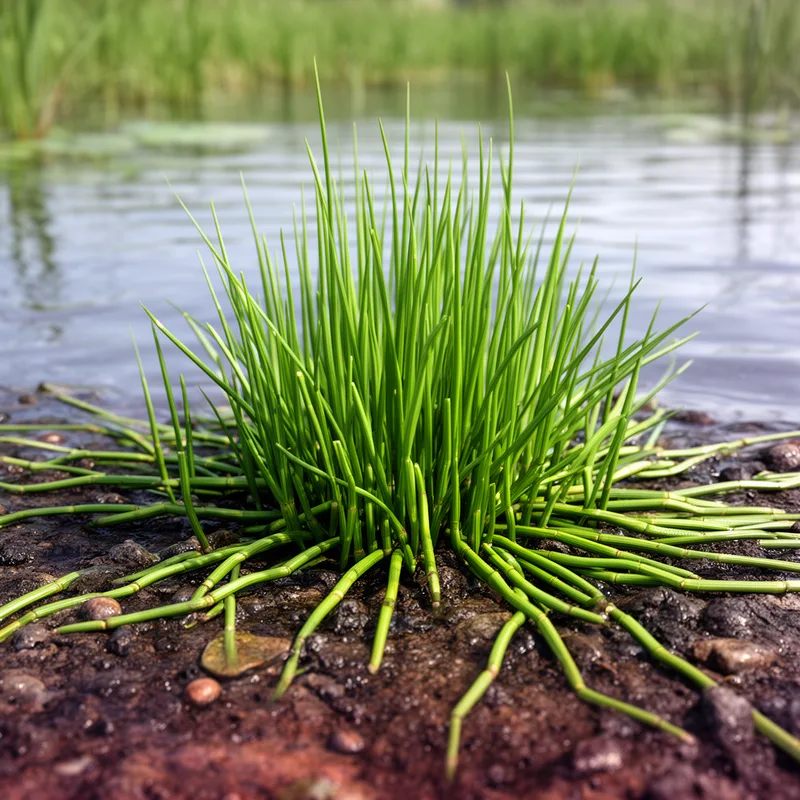
creeping spike rush
- noun
- The pond was fringed with creeping spike rush and other aquatic plants.
Examples
-
Restoration projects often include planting creeping spike rush to prevent soil erosion.
-
The creeping spike rush thrives in wetland areas.
-
Botanists identified the plant as creeping spike rush during the survey.
-
Many gardeners appreciate the creeping spike rush for its hardiness.
-
During our walk in the wetlands, we noticed the creeping spike rush thriving alongside the water.
-
The restoration plan highlighted the importance of creeping spike rush in enhancing local biodiversity.
-
Many wildlife species rely on creeping spike rush as it provides cover and nourishment in wetland habitats.
Synonyms
A plant that lives many years with thin round stems that grows in wet places

A thin grass-like plant that grows in wet places like marshes
Surface Forms
Morphology
The name is fully compositional: 'creeping' describes a spreading habit, 'spike' refers to the spike-like stalk or inflorescence, and 'rush' names the marsh plant. This follows ordinary noun-modifier patterns (descriptor + parts + head noun) so a B1 learner who knows the constituents can infer it is a type of spreading rush with spike-like stems.
Etymology
Creeping spike rush gets its name from how the plant looks and grows: the rush is a grass-like water plant, its stems are thin spikes, and it slowly creeps along the ground or the edge of water, so the name describes a spreading wetland plant.

