
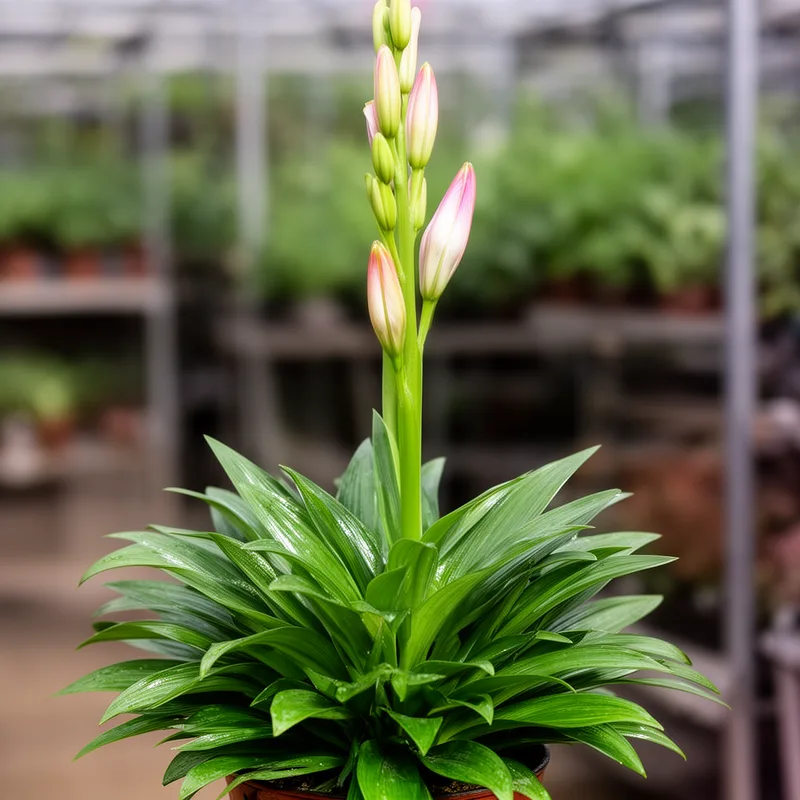
to spike out
- phrasal verb
- The orchids in the greenhouse are starting to spike out this spring.
Examples
-
In early spring, many bulbs spike out with tall stems before their flowers open.
-
Many bulbs will spike out before producing any visible blooms.
-
As the lilies spike out, gardeners anticipate a burst of color in the beds.
-
The cactus spikes out beautifully in spring.
-
The flowers spiked out after the rain.
-
As the lilies spike out, they create a stunning display of vibrant colors.
-
The orchids in the greenhouse tend to spike out when the weather warms up.
Synonyms

 1
6.3
1
6.3

To grow a long stem that holds flowers
How Tall

Surface Forms
Morphology
The verb 'spike' already means to produce or send up a spike and the particle 'out' adds a straightforward sense of emergence or outward direction, so the combined meaning — to produce an elongated flowering stem that comes out — is directly inferable. This verb+particle composition follows common, transparent English patterns (and similar constructions exist in other languages), so a B1 learner who knows the constituents would understand it.
Etymology
The verb spike out comes from a simple garden image: a plant sends up a long, thin flowering stem called a spike, pushing out of the soil. So it means 'to produce a long flowering stem'.