
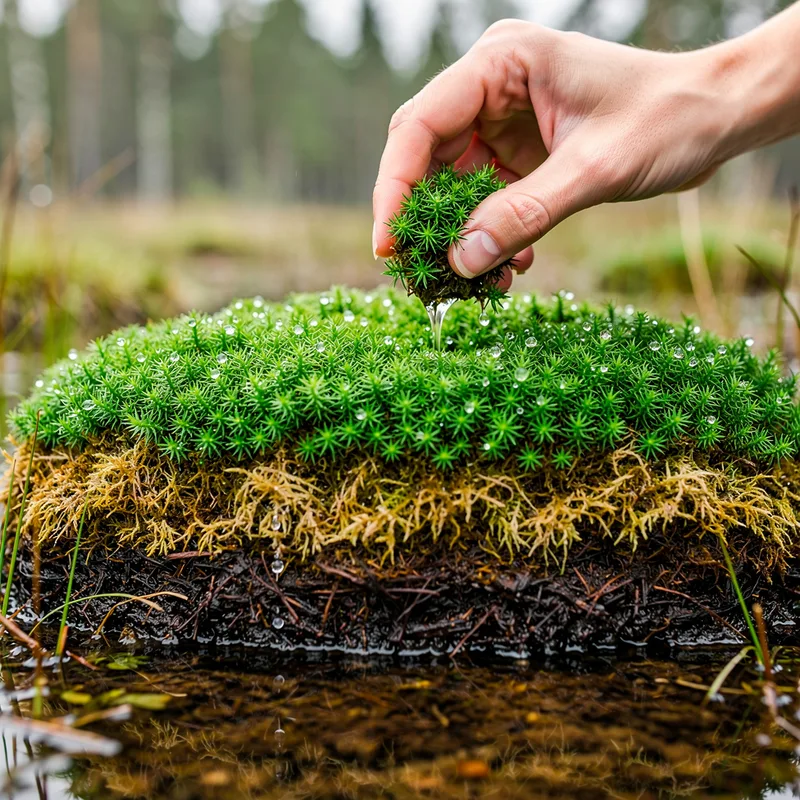
sphagnum moss
 1
7.2
1
7.2

- noun
- /ˈsfæɡnəm mɔs/
- Hiking through the wetlands, we saw patches of vibrant green sphagnum moss covering the ground.
- stuffed with sphagnum moss
Loading YouTube…
Watch on YouTubePeat Moss is basically just it's blended up sphagnum Moss, but it's not broken down yet.
- Peat Moss is basically just it's blended up sphagnum Moss, but it's not broken down yet.
Examples
-
Small mounds of soil, many capped with sphagnum moss, rise above the water, which is shallow.
Academic text (1998) -
Basking time ranges anywhere from two minutes to seven hours, depending upon available substrates; for example, rock, wood, or sphagnum moss.
Academic text (1992) -
Layers of live sphagnum moss grow on top of dead but not yet decomposed layers, which can be of great depth, with a bottom that is difficult to see.
Academic text (2002) -
Because of the spongelike action of sphagnum moss, the peat stays in place rather than flowing downslope.
Academic text (2002) -
Bogs often form in lakes where poor drainage permits the accumulation of organic matter, especially sphagnum moss, which builds up in thick layers of peat.
Academic text (1998) -
The gardener uses sphagnum moss as a natural mulch to help retain moisture in the soil.
-
For optimal plant growth, it's beneficial to include sphagnum moss in your potting mix because it improves aeration.
Synonyms
 2
9.9
2
9.9
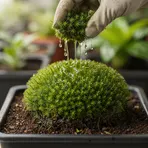
A soft moss that holds water and forms peat for gardens
 1
4.5
1
4.5
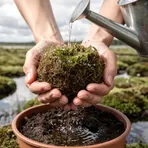
A soft plant from bogs that helps soil hold water
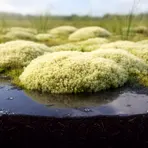
A soft pale moss that grows in very wet ground and helps make peat
Surface Forms
Morphology
The phrase is a straightforward noun–noun compound naming a type of moss (a moss of the genus Sphagnum); if a learner knows 'sphagnum' and 'moss' the meaning is directly derivable. This compositional botanical naming pattern is regular and cross-linguistically common, so it will be clear to B1 learners who know the constituents.
Etymology
Sphagnum moss refers to a pale, sponge-like plant: sphagnum, a kind of moss, that soaks up and holds a lot of water. That's why gardeners use sphagnum moss to keep soil moist and why it slowly breaks down into wet 'peat' in bogs.