
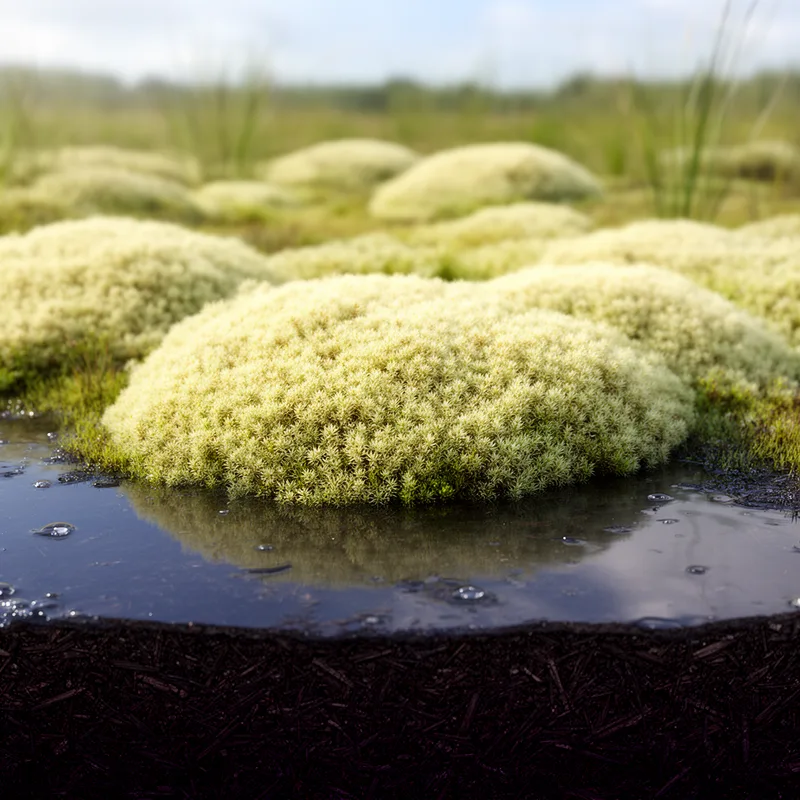
bog moss
- noun
- Specialized
- Bog moss plays a crucial role in the formation of peat bogs.
Examples
-
You can often find bog moss carpeting the ground in damp, acidic environments.
-
The scientist collected samples of bog moss from the wetlands for analysis.
-
The bog moss thrives in wetland areas.
-
Many bog mosses can be found in northern climates.
-
Bog moss plays a crucial role in the formation of peat bogs.
-
You can often find bog moss carpeting the ground in damp, acidic environments.
-
The scientist collected samples of bog moss from the wetlands for analysis.
Synonyms
 2
9.9
2
9.9

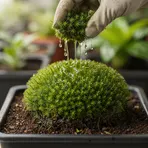
A soft moss that holds water and forms peat for gardens
 1
7.2
1
7.2
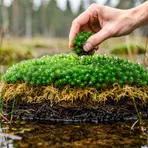
A soft, spongy moss that grows in wetlands and turns into peat when it rots
 1
4.5
1
4.5
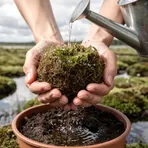
A soft plant from bogs that helps soil hold water

A group of moss plants that hold a lot of water and help form peat bogs
Surface Forms
Morphology
The compound meaning is directly and compositionally built from 'bog' (a damp peatland) + 'moss' (a small nonflowering plant), so a B1 learner who knows both words will understand it as the type of moss that grows in bogs. Technical botanical details (Sphagnum genus, peat formation) are specialist, but the basic referent is transparently derivable from the constituents.
Etymology
Bog moss comes from the simple picture of bog + moss: soft moss that grows in wet 'bogs' and whose dead parts help make 'peat'. So, bog moss today means the moss that lives in bogs and helps form 'peat'.