
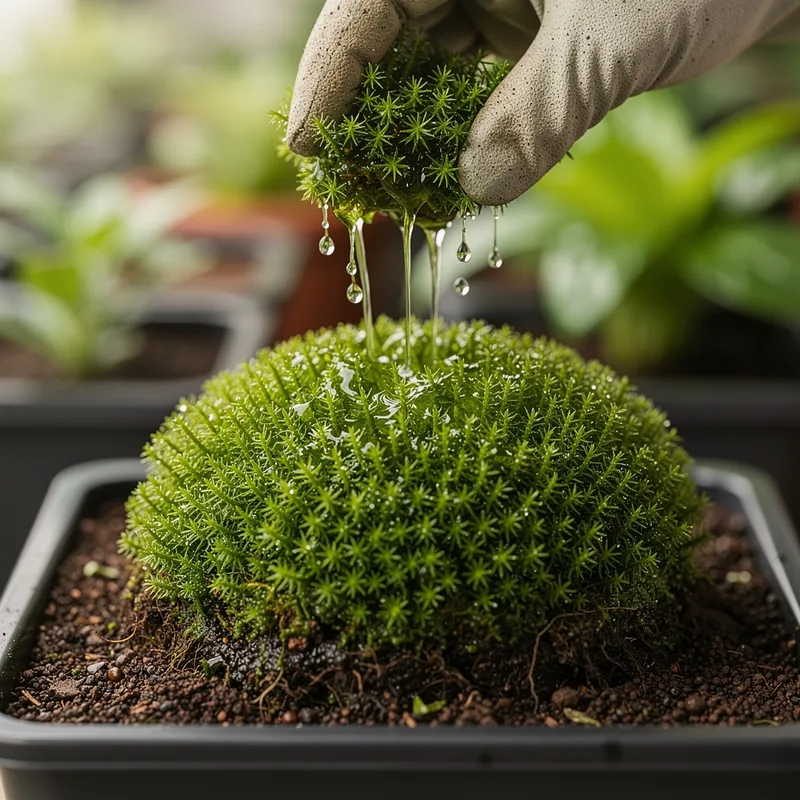
sphagnum
 2
9.9
2
9.9

- noun
- /ˈsfæɡnəm/
- Specialized
- Bogs often form in lakes where poor drainage permits the accumulation of organic matter, especially sphagnum moss, which builds up in thick layers of peat.
- sphagnum moss
- sphagnum peat
Loading YouTube…
Watch on YouTubeAnd I really want to try to look for a patch of this key player in a bog environment, which is sphagnum Moss.
- And I really want to try to look for a patch of this key player in a bog environment, which is sphagnum Moss.
- This is just perlite, vermiculite, sphagnum, peat Moss and and humus.
Examples
-
Small mounds of soil, many capped with sphagnum moss, rise above the water, which is shallow.
Academic text (1998) -
So this is a really big bag up here of sphagnum peat Moss.
-
Up to 80 percent of sphagnum is water, yet it is strong enough to walk on, albeit with a sense of "springiness."
Academic text (2002) -
Because of the spongelike action of sphagnum moss, the peat stays in place rather than flowing downslope.
Academic text (2002) -
Originally a glacial lake, the fen has filled in with vegetation, notably sphagnum, or peat moss.
Academic text (2011) -
To help the orchids thrive, add sphagnum moss to retain moisture in the potting mix.
-
Gardeners often use sphagnum moss to improve soil quality and increase water retention.
-
The layers of sphagnum moss in the bog slowly decompose, creating nutrient-rich peat over time.
Synonyms
 1
7.2
1
7.2
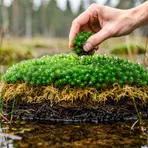
A soft, spongy moss that grows in wetlands and turns into peat when it rots
 1
4.5
1
4.5
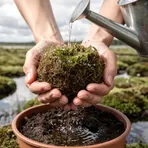
A soft plant from bogs that helps soil hold water
A soft pale moss that grows in very wet ground and helps make peat
Compounds

- Specialized
A group of moss plants that hold a lot of water and help form peat bogs
Surface Forms
Etymology
Sphagnum comes from the Greek word sphagnos, which means 'bog-moss'. A helpful way to remember it is to think of a 'sponge' because sphagnum soaks up and holds water and its dead parts form peat that gardeners use.